For orthopaedic practices aiming to lift clinical standards and streamline post-operative care, timely follow-up is essential to catch complications early, support rehabilitation and sustain patient confidence, and AI voice calls offer a practical way to make those check-ins reliable and scalable; by automating symptom screening, medication and wound checks, and appointment reminders while flagging patients who need human review, clinics can reduce no-shows and readmissions, personalise communication through patient-specific scripts and timing, and still maintain clinical safety with clear escalation paths to surgeons or nurses. When integrated with practice management and clinical systems, these AI-driven calls update electronic records, trigger care pathways and co‑ordinate allied health referrals without adding administrative burden, delivering measurable improvements in efficiency, lower per-patient follow-up costs and higher patient satisfaction. Crucially, choosing a provider that processes and stores all voice and clinical data on Australian soil strengthens compliance with local privacy laws, reduces data sovereignty risk and builds trust with patients who expect their medical information to remain within national borders. This post explores how orthopaedic teams can implement AI voice follow-ups in a way that protects patient safety, preserves clinical oversight, integrates with existing workflows and delivers clear business outcomes for both small practices and larger hospitals.
Why Timely Follow-up Matters in Orthopaedic Care
Timely follow-up after orthopaedic surgery is critical for catching complications such as infection, deep vein thrombosis, wound dehiscence or neurovascular compromise when interventions are most effective. Delays in recognising these issues can lead to poorer outcomes, longer hospital stays and increased likelihood of revision surgery. Automated AI voice calls provide a reliable, repeatable way to screen patients for red‑flag symptoms in the days and weeks after discharge, prompting immediate escalation to a surgeon or nurse when responses indicate concern. For busy practices, this standardised, scalable approach reduces reliance on ad hoc phone calls and ensures no patient falls through the cracks. Crucially, when those calls and resulting clinical notes are handled through a locally hosted service such as AiDial, the data that underpins escalation and clinical decision-making remains protected under Australian Data Sovereignty, supporting compliance with Australian privacy requirements and building trust with patients and referrers.
Recovery after orthopaedic procedures depends on consistent adherence to rehabilitation plans, safe analgesic use and early problem identification. Regular touchpoints keep patients engaged with physiotherapy, confirm correct use of analgesia and identify barriers to progress such as increasing pain, swelling or mobility issues. AI voice calls can deliver patient-specific scripts and timing, capture functional measures and pain scores, and prompt referrals to allied health when recovery stalls. This level of ongoing contact boosts functional recovery and reduces long-term disability by catching issues before they escalate. Using a solution that observes Australian Data Sovereignty means sensitive rehabilitation notes and patient-reported outcome measures are processed and stored on Australian soil, addressing privacy concerns and meeting expectations of local health services and insurers, which in turn increases patient willingness to share honest information during follow-up.
From an operational perspective, timely follow-up reduces missed appointments, readmissions and avoidable clinic visits, creating predictable workflows and freeing clinicians to focus on complex care. Automated calls act as an often-overlooked triage layer that directs scarce clinical time to patients who truly need in-person review, improving clinic throughput and cutting out wasted costs. Reliable documentation of outreach and escalation also strengthens medico-legal protection by demonstrating standardised post-operative surveillance and informed oversight. Choosing an AI call platform like AiDial that integrates with practice management systems and guarantees Australian Data Sovereignty reinforces these business benefits: organisations retain full control of health data, satisfy auditors and regulators, and reassure patients and referrers that follow-up communications are secure, private and compliant with Australian health sector expectations.
How AI Voice Calls Improve Post-Operative Patient Monitoring
AI voice calls automate routine post-operative check-ins so orthopaedic teams can monitor large cohorts without compromising care. Scheduled, conversational calls can screen for key symptoms such as fever, unexpected swelling, wound drainage, neurological changes and pain control, and they can prompt patients to confirm medication and physiotherapy adherence. Because interactions are consistent and protocol-driven, clinics reduce variability in screening quality, catch concerning signs earlier, and ensure that only patients who need clinical review are escalated to a nurse or surgeon, preserving clinical time for higher‑value work.
Beyond symptom capture, AI calls streamline workflows by integrating responses directly into practice management and clinical systems to create a real-time record of recovery progress. AiDial’s solution can triage replies using configurable risk scores, trigger care pathways or urgent callbacks, and generate audit-ready documentation for follow-up appointments and medico-legal purposes. The result is measurable efficiency: fewer manual outreach calls, shorter administrative load for reception and nursing staff, reduced no-shows through timely reminders, and lower risk of readmission through earlier intervention—translating into cost savings for the practice and better outcomes for patients.
Crucially, these operational gains are delivered with local data governance that builds patient and clinician trust. AiDial processes and stores voice interactions on Australian soil under a framework of Australian Data Sovereignty, helping practices meet privacy and health-record obligations while reducing cross-border risk. That local approach also enables faster, customised support and tailoring to orthopaedic follow-up protocols, so clinics can confidently scale automated monitoring without sacrificing clinical safety or data security.
Reducing No-Shows and Readmissions with Automated Follow-ups
Automated voice calls from AiDial turn routine reminders into actionable confirmations, reducing clinic no-shows and freeing reception teams to focus on complex tasks. Calls are timed to patient preferences and can be two-way, allowing patients to confirm, cancel or request a new appointment without speaking to staff. That immediate feedback lets practices reallocate cancelled slots quickly, improving clinic utilisation and reducing wasted theatre and clinic capacity. Integration with practice management systems updates schedules in real time so follow-up appointments are rebooked automatically when needed. Because AiDial processes and stores call data onshore under Australian Data Sovereignty, practices can reassure patients that reminder interactions and contact details remain protected within Australia, aligning with privacy obligations and strengthening patient trust in automated communications.
AiDial’s guided symptom screening calls provide standardised checks for pain, wound status, mobility and medication adherence at clinically appropriate intervals, flagging concerning responses for immediate human review. When the AI detects red flags, it triggers escalation pathways that alert nursing staff or the treating surgeon and can arrange same-day callbacks or urgent reviews. This early detection pathway reduces the likelihood of complications progressing to emergency presentations or readmission by ensuring timely clinical intervention. Processing these interactions within Australia under Australian Data Sovereignty speeds secure access to records and keeps sensitive clinical information governed by local privacy frameworks, so clinicians can act quickly with confidence that patient data remains protected and auditable.
By analysing appointment behaviour, procedure type and comorbidity patterns, AiDial helps practices identify patients at higher risk of missing follow-ups or requiring readmission and runs targeted call campaigns to keep them engaged. These data-driven campaigns can prioritise complex orthopaedic cases, older patients or those with limited mobility, delivering personalised timing and messaging that increases attendance and adherence to rehabilitation plans. Dashboards show trends in no-shows, unattended calls and escalation rates so managers can adjust staffing and resource allocation to where it matters most, driving cost savings and better outcomes. Maintaining all analytics and voice recordings onshore under Australian Data Sovereignty ensures quality improvement efforts remain compliant with local regulations and preserves patient confidence in how their health data is used.
Personalising Patient Communication While Maintaining Clinical Safety
Personalise follow-up by using patient-specific scripts and timing informed by the operation, comorbidities and recovery pathway. AiDial’s AI voice calls can deliver surgeon‑approved prompts that reflect the exact procedure and meds prescribed, vary tone and pacing for older patients, and offer language options for culturally and linguistically diverse cohorts. Calls can be scheduled to match clinical milestones — for example wound checks at 48 hours, pain and mobility screens at one week, and rehab adherence checks at two weeks — and responses feed back to the practice management system so subsequent interactions are tailored in real time. This level of personalisation improves patient engagement, adherence to post‑op instructions and overall satisfaction without adding administrative burden.
Maintaining clinical safety requires clear escalation rules, clinician oversight and robust audit trails, and AiDial is designed with that clinical governance in mind. AI call scripts are approved and versioned by clinicians, with built‑in red flags that trigger immediate alerts to nurses or the on‑call surgeon when a patient reports concerning symptoms or fails key checks. All escalations include time‑stamped transcripts and structured data entries that update the electronic record, preserving medico‑legal documentation and enabling rapid human handover. Because AiDial processes and stores this sensitive information on Australian soil under Australian Data Sovereignty, clinics retain control of patient records and reduce the compliance risk associated with offshore storage.
Accessibility and consent are central to safe personalisation: AiDial supports informed opt‑in workflows, multilingual scripts, plain‑language phrasing for varying health literacy and alternative follow‑up channels such as SMS or secure messaging for patients with hearing impairment. Clinicians can monitor dashboards and intervene where needed, using the system to concentrate human resources on patients who require proactive clinical review. The net result is a scalable follow‑up programme that personalises care, preserves clinical safety and builds patient trust — particularly because all call recordings, transcripts and escalation notes remain within Australia, aligning with regulatory expectations and patient privacy preferences.
Integrating AI Calls with Practice Management and Clinical Systems
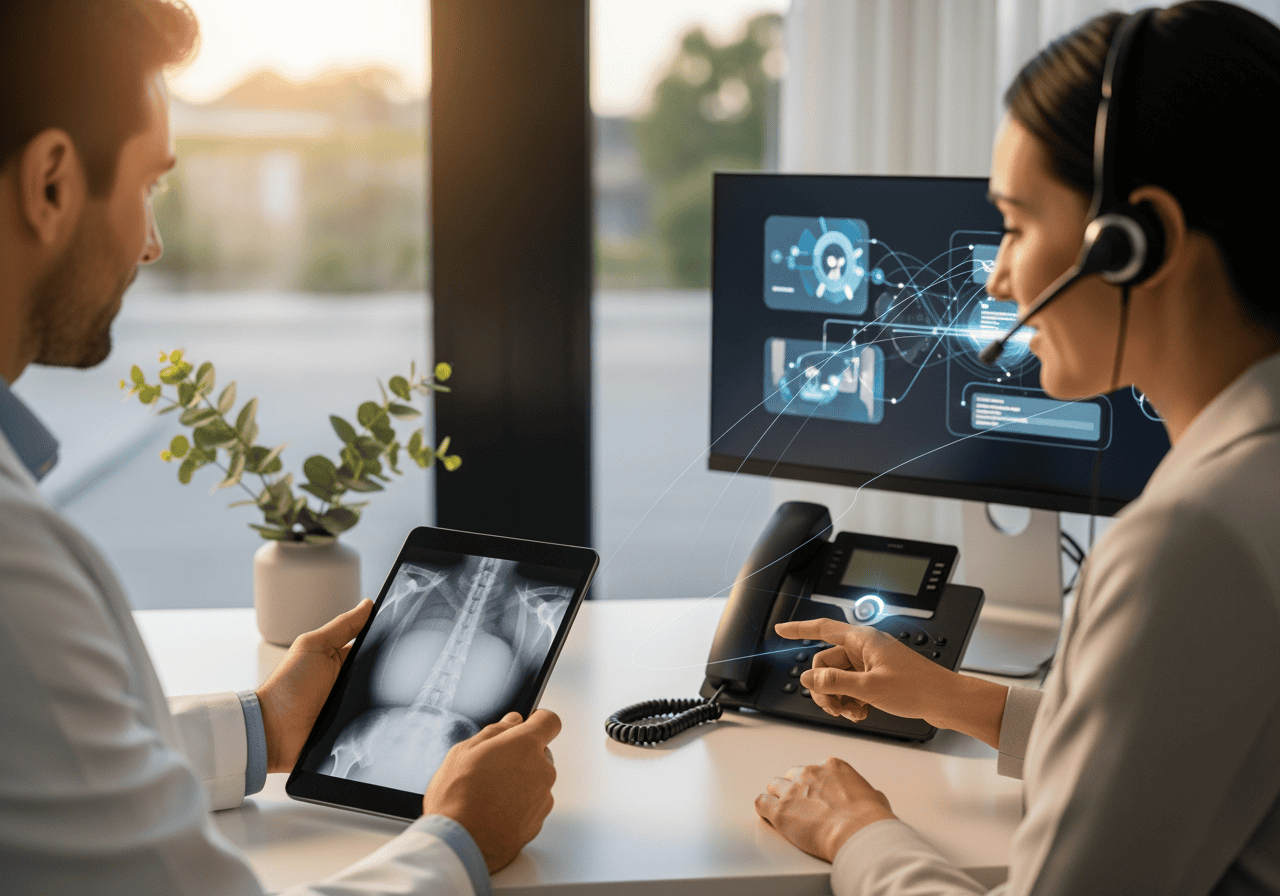
Integrating AI voice calls with your practice management system turns scheduled follow-ups into automated, reliable workflows that save admin time and reduce errors. AiDial can trigger calls based on appointment status, procedure codes or bespoke timing rules, ensuring each orthopaedic patient receives the right check-in at the right time. Patient matching uses identifiers from the practice management database so responses are logged against the correct record and appointment outcomes—confirmation, reschedule, escalation—update the system in real time. That removes duplicate entry, shortens front‑desk callbacks and streamlines billing reconciliation by attaching follow-up outcomes to encounters. For practices running multiple surgeons or clinic locations, rule-based templates customise call timing and scripts for different procedures, allied health referrals and rehab milestones. The result is consistent, auditable follow-up that reduces downstream administrative load and improves clinic throughput while preserving clinical oversight.
Direct integration with electronic medical records and clinical decision support ensures AI-collected data becomes clinically useful rather than siloed. AiDial maps patient responses—pain scores, wound status, medication adherence—into structured fields using standards such as FHIR or HL7, so nursing staff and surgeons see up-to-date information in the chart without manual transcription. Intelligent rules flag concerning answers for immediate human review and automatically create tasks, message the on-call nurse or book urgent consults, preserving a clear escalation path and clinical safety. Integration also supports audit trails and clinician annotations, so teams can reconcile AI call outcomes with face-to-face reviews and track recovery trajectories. Embedding AI follow-up into clinical workflows means quicker decision-making, fewer missed complications and better continuity between automated monitoring and hands-on care.
Integrations must protect health data throughout transmission, processing and storage, and Australian Data Sovereignty is central to that assurance. AiDial keeps call data and integration endpoints hosted in Australia, reducing legal complexity under the Australian Privacy Principles and state health records legislation while simplifying breach notification obligations. Encrypted APIs, role-based access controls and comprehensive logging ensure data moving between AI calls and practice systems remains secure and traceable. Local hosting also improves latency and reliability for time-sensitive escalations and offers easier, faster local support when integrations need adjustments. For orthopaedic practices, this means confident compliance, demonstrable security for patient consent and stronger trust with patients and referrers, all while achieving the efficiency and clinical benefits of tightly integrated AI-driven follow-up.
Protecting Patient Data: The Importance of Australian Data Sovereignty
Health information collected during post-operative follow-up is among the most sensitive data an orthopaedic practice holds. Under Australian privacy law and the Notifiable Data Breaches scheme, practices have a duty to protect patient information and to notify individuals and regulators if a breach occurs. Keeping AI voice processing and storage on Australian soil reduces exposure to foreign jurisdictions and the complex cross-border legal risks that can arise when data traverses international cloud providers. For orthopaedic clinics, this means a lower regulatory burden and clearer lines of accountability if a privacy issue ever needs investigation.
From a practical perspective, Australian data sovereignty improves both security and patient experience. Onshore processing reduces latency for voice interactions, which directly improves call quality and patient comprehension during symptom screenings or medication checks. It also allows hospitals and clinics to demand local data residency, encryption standards and audit logs that align with Australian health sector requirements. Having data centres and technical support in the same time zone enables faster incident response, localised security controls and predictable compliance documentation for audits and accreditation.
AiDial’s AI voice solutions are designed with Australian data sovereignty at their core, ensuring all call processing, transcription and storage remain in-country. This helps orthopaedic practices demonstrate due diligence to patients, insurers and public health partners while protecting clinical confidentiality and building trust. By choosing an onshore AI provider, practices can confidently scale automated follow-ups, reduce administrative costs and improve patient outcomes knowing their data governance aligns with Australian legal and ethical expectations—while also benefiting from local support to integrate securely with practice management and electronic medical record systems.
Measuring Outcomes: Efficiency, Cost Savings and Patient Satisfaction
Measuring efficiency starts with a concise set of operational KPIs that show how AI voice calls change day-to-day workflows. Track completed follow-up rate, average handling time per patient interaction, escalation rate to clinical staff, time-to-escalation and appointment attendance improvement. AiDial’s automated calls handle routine symptom checks and medication reminders, reducing repetitive admin calls and freeing nurses for higher-value clinical tasks; this is visible in reduced phone workload and fewer manual record updates because each interaction is logged directly into practice systems. Real-time dashboards and exportable reports let practices monitor throughput, identify bottlenecks and measure shifts in full-time equivalent (FTE) effort. Crucially, when data is processed and stored onshore under Australian Data Sovereignty, reporting is auditable, privacy-compliant and quicker to approve by governance teams, so efficiency gains are both demonstrable and defensible to stakeholders and regulators.
Translating efficiency into cost saving requires a simple, repeatable ROI model. Start with baseline costs: average staff wage per minute for follow-up calls, current follow-up volume and readmission costs attributable to missed or late checks. Compare this to the per-interaction cost of AiDial automated calls plus any integration fees. Include downstream savings: fewer missed appointments, lower emergency presentations, reduced paper-based admin and faster billing cycles. Practices often find savings from redeploying clinical staff into revenue-generating activities rather than repetitive calling. AiDial helps with sensitivity modelling by providing historical call data and projected volumes so you can estimate payback period and net present value. Because all data stays within Australia, compliance-related overheads and potential cross-border legal costs are minimised, strengthening the financial case and lowering risk premiums when calculating long-term savings.
Patient experience and clinical outcomes are core to measuring the value of post-operative follow-up. Use a mix of quantitative metrics such as Net Promoter Score (NPS), satisfaction ratings after calls, rates of complication detection and 30-day readmission rates, plus qualitative themes from call transcripts to understand pain points. AiDial’s conversational calls can include brief, structured satisfaction surveys and symptom scales, feeding responses back into the clinical record for timely intervention. The advantage of Australian Data Sovereignty here is twofold: patients are more likely to trust follow-up that keeps their health data in Australia, and clinicians can access complete, auditable records for outcomes research without cross-border restrictions. Over time, triangulating satisfaction scores with reduced complications and adherence to rehab plans demonstrates both clinical benefit and stronger patient-centred care, which supports accreditation and continuous improvement initiatives.



Conclusion and Key Takeaways
Timely orthopaedic follow-up is central to better clinical outcomes and fewer costly readmissions, and AI voice calls provide a practical way to monitor patients, reduce no-shows and capture early warning signs without overburdening clinical teams. Personalised, clinically safe call scripts combined with integration into practice management and clinical systems mean follow-ups are consistent, tracked and actionable, delivering measurable gains in efficiency, patient satisfaction and cost control.
AiDials AI voice solutions deliver these benefits while ensuring Australian data sovereignty, so patient information is processed and stored onshore to support security, privacy and regulatory compliance. For orthopaedic practices looking to optimise post-operative workflows and improve patient outcomes, Book a Demo with AiDial to see how AI calls can reduce risk, save time and enhance the patient experience.