Planning child-friendly events calls for more than balloons and entertainers; it means designing secure play areas with clear supervision routines, selecting activities that suit different age groups, and matching staffing levels to expected guest numbers to keep capacity and ratios safe and comfortable. Effective events also anticipate medical, dietary and allergy requirements through pre-event capture and on‑site protocols, and combine trained security and crowd-management plans with practical emergency response procedures so families feel confident their children are protected. Smart technology can pull all of this together — streamlined check-in, instant notifications to parents and real-time monitoring reduce wait times, improve responsiveness and free staff to focus on guest experience. AiDial’s AI voice solutions further enhance safety and efficiency by automating confirmations, managing enquiries and escalating incidents while capturing leads and reducing labour costs, all with data processed and stored exclusively on Australian soil to meet privacy expectations and regulatory requirements. This post will walk through practical steps and takeaways to help you deliver safer, smarter celebrations that parents trust.
Creating Child-Safe Event Zones and Supervision Protocols
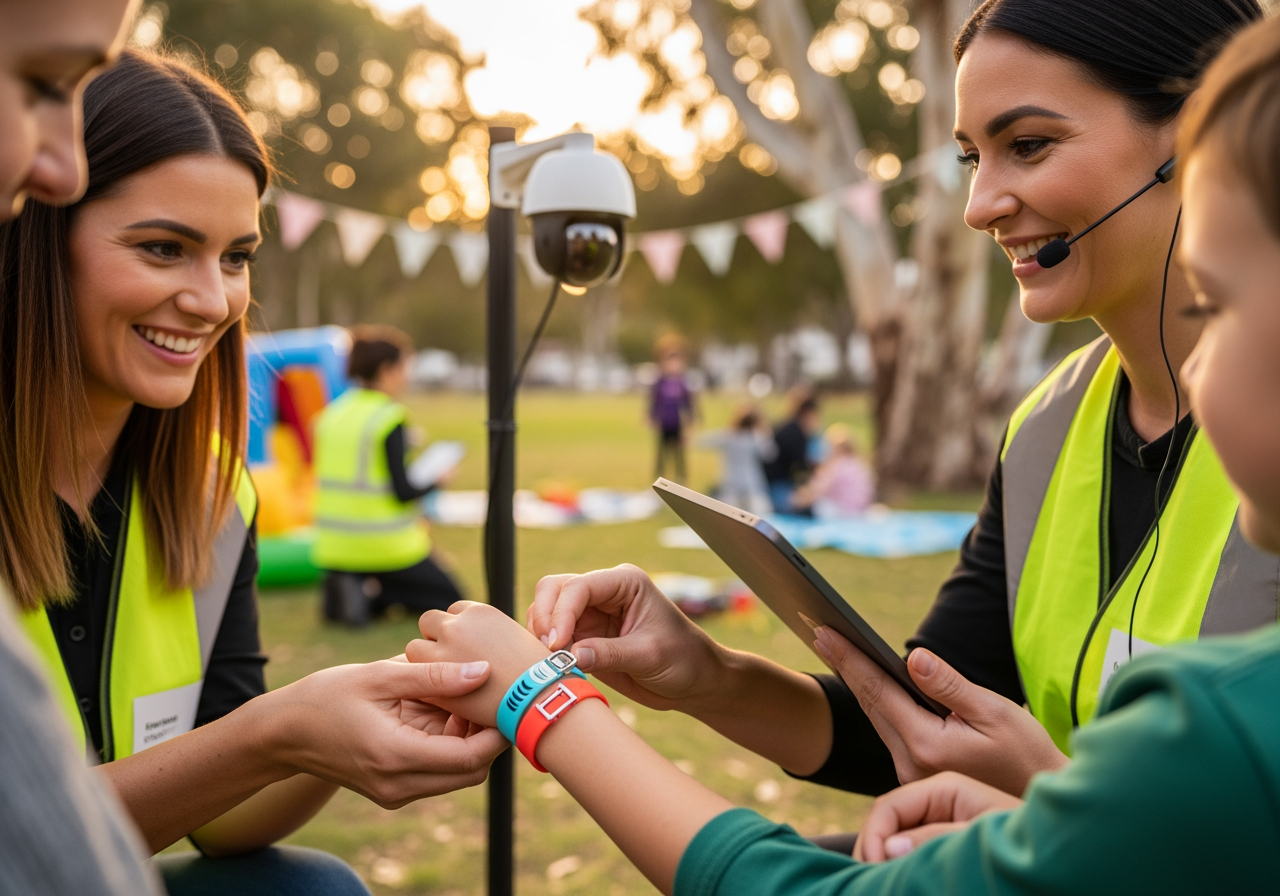
Start by dividing the venue into clearly defined zones: active play, quiet rest, catering, nappy change and secure parent-only areas. Use low barriers, soft surfacing and unobstructed sightlines so supervisors can monitor multiple children without creating blind spots. Entrances and exits should be single-point controlled with staffed access, wristband or RFID systems and visible check-in desks to prevent unauthorised wandering. Temporary fencing and colour-coded zones make it obvious where children of different ages should stay, reducing accidental mixing of age-inappropriate activities. For events collecting contact or medical details, ensure any digital capture at zone entry is handled securely; partnering with AiDial lets organisers utilise AI-enabled voice and verification flows that keep data processing and storage strictly within Australia, supporting compliance and reassuring families that sensitive information remains protected under Australian data sovereignty.
Clear supervision protocols start with defined staff-to-child ratios tailored to age groups and activity risk. Assign roving supervisors to maintain flexible oversight across zones and appoint zone leaders responsible for incident logs, medication administration and authorised pick-up lists. Handover procedures must include positive identification, a signed release or secure authorisation code and a double-check system to verify parent or guardian identity at pick-up. Establish escalation steps for lost children or medical incidents, including a fast-track communication plan and a designated reunification point. Use technology sparingly but effectively to record handovers and incidents; AiDial’s AI voice solutions can automate secure voice confirmations and timestamped records that are stored on Australian servers, making audit trails robust while preserving privacy under Australian data sovereignty.
Effective signage and staff training reduce confusion and keep children safe. Install easy-to-read signs that outline rules, emergency exits, first-aid locations and age restrictions, and place child-height signs where appropriate. Regular pre-event briefings should run through supervision assignments, behaviour management protocols and medication handling, plus scenario drills for common incidents. Equip staff with clear on-site communication channels such as assigned radios and a central command station to co-ordinate responses and reallocate resources in real time. For parent communications and urgent notifications, integrate secure voice alerts and callouts that are clear and consistent; AiDial provides Australian-hosted AI voice services that deliver these messages reliably while ensuring parent contact data never leaves Australian jurisdiction, reinforcing trust and compliance with local privacy expectations.
Age-Appropriate Entertainment, Staffing and Capacity Planning
Designing age-appropriate entertainment starts with accurate guest profiling and thoughtful zoning so activities match developmental stages and reduce risk. Divide the venue into clear age bands with appropriate furniture, toys and play equipment, include quiet chill-out areas for oversensitive children and plan circulation paths to avoid pinch points during peak arrival and departure times. Gathering basic age and interest information before the event lets you programme sessions that engage each group, reduce wastage on unsuitable entertainment and improve parental satisfaction because children are happier and safer throughout the event.
Staffing should be driven by the age mix, anticipated behaviours and contingency plans for surges, rather than blunt headcount targets. Prioritise staff who specialise in early childhood supervision, first aid and behaviour management, and ensure every roster includes float roles to cover sick calls or sudden crowding; clear role definitions and pre-event briefings keep teams focused and compliant. Using intelligent voice workflows to confirm shifts, run safety briefings and record acknowledgements saves coordinator time, reduces errors in rostering and cuts casual labour costs by matching staff supply precisely to demand while maintaining visible accountability.
Capacity planning benefits from staged admissions, activity time-slots and dynamic waitlist management so you avoid unsafe crowding while maximising attendance and spend per head. Automating confirmations, reminders and real-time parent notifications through AI voice interactions reduces no-shows, smooths arrivals and allows staff to proactively manage transitions between zones. Crucially, when these systems process and store family and child information entirely in Australia you strengthen trust, simplify compliance with the Australian Privacy Principles and other local regulations, and protect sensitive data while delivering a measurable uplift in operational efficiency and guest experience.
Managing Medical, Dietary and Allergy Needs at Children’s Events
Start by building mandatory fields into online registration that capture medical conditions, allergies, dietary requirements and emergency contacts in plain language. Ask parents to confirm consent for staff to administer specified medications and to share critical details with named carers. Use multiple touchpoints to reduce omissions: registration forms, confirmation emails and a quick pre-event voice check from an automated system. AiDial’s AI voice solutions can run secure outbound voice confirmations in common community languages to validate details, flag missing information and provide a timestamped record of parent acknowledgements. This approach reduces on-site paperwork, shortens check-in queues and gives event organisers reliable, standardised information to plan catering, activity suitability and staffing. Importantly, store consent and medical summaries alongside the registration so staff can access up-to-date information without rifling through paper files, improving responsiveness while respecting family preferences and consent directives.
Operational protocols should be practical and rehearsed: clear labelling for allergy-safe food zones, designated medication storage with temperature monitoring, a simple incident reporting flow and visible identifiers for children with specific needs. Train all frontline staff in recognising anaphylaxis signs, the location and use of epi-pens, and how to escalate medical incidents. Keep concise, accessible medical summaries for staff who need them, and maintain a secure log of any medication administered. AiDial’s AI voice platform can assist on-site by providing instant voice alerts to first aiders and event managers when a parent or staff member reports a concern through a kiosk or voice line. Automated routing ensures the right person is notified immediately, reducing delays and allowing trained personnel to focus on care rather than chasing information. Regular drills that include the communication system ensure the team responds calmly and consistently when real incidents occur.
Handling health and dietary data requires rigorous privacy practices and auditable access controls. Limit data visibility on a need-to-know basis, use role-based permissions, and keep an immutable audit trail of who accessed or changed records. Ensure all sensitive records are encrypted at rest and in transit, and retain data only as long as required for safety and regulatory purposes. Choosing a supplier that processes and stores data in Australia is a critical risk reduction measure: Australian data sovereignty means health and consent records remain under Australian law and are protected from unintended cross-border exposure. AiDial processes voice confirmations and stores event-related data exclusively on Australian infrastructure, simplifying compliance with the Privacy Act and state health guidelines while giving families stronger assurances about how their childrens information is handled. This local control builds trust with parents and reduces legal and reputational risk for event organisers.
Security, Emergency Response and Crowd Management Best Practices
Start by treating security as an integral element of the event design rather than an add-on. Conduct a thorough risk assessment to identify pinch points, secure perimeters and controlled access routes, then align security staffing levels and patrol patterns with those findings. Practical measures such as wristband identification for children, clear ID for staff and volunteers, and visible but approachable security personnel help prevent unauthorised access while keeping families comfortable. AiDial’s AI voice solutions can streamline these routines by automating staff roll calls, shift handovers and incident reports via secure voice workflows, reducing administrative load on frontline teams so more resources remain on the floor. All data captured during these processes is processed and stored in Australia in line with Australian Data Sovereignty, which reassures organisers and families that sensitive information stays local and complies with Australian privacy expectations.
Emergency response planning must be rehearsed and simple to execute under pressure. Establish clear evacuation routes, assembly points and a reunification protocol that specifies how children are identified, matched to guardians and tracked through the process; brief every staff member, contractor and volunteer on their role in these plans. For live incidents, timely communication is essential: AI-driven voice alerts can deliver consistent, authoritative instructions to attendees and staff, trigger escalation to first responders and confirm when actions have been completed. By logging these communications automatically and keeping all recordings and contact lists on Australian servers, AiDial helps event organisers meet regulatory requirements and preserve an auditable trail without exposing family data offshore.
Crowd management focuses on preventing compression and confusion as much as reacting to it. Use thoughtful layout, one-way flows, clear signage and staggered activity times to distribute people naturally, and deploy visible support hubs for families to reduce bottlenecks. Integrating real-time monitoring tools with AI voice notifications enables automated capacity alerts, targeted crowd-dispersal prompts and dynamic routing instructions to keep circulation smooth; if queues build, immediate voice updates reassure waiting families and cut perceived wait times. AiDial integrates with monitoring systems to provide these voice-based interventions and two-way escalation to onsite staff or a central operations centre, delivering measurable efficiency gains, better guest experience and the confidence that all personal communications and logs are retained within Australia under Australian Data Sovereignty.
Technology for Safer Events: Smart Check-In, Notifications and Monitoring
Smart check-in systems transform arrival flows and reduce bottlenecks at child-friendly events by combining contactless ID verification, pre-registration and AI voice prompts to guide families through a seamless process. AiDial’s AI voice solutions can handle routine check-in confirmations and schedule updates over the phone or at kiosk terminals, freeing frontline staff to attend to supervision and safety tasks. Contactless wristband or QR pairing links a child to guardian details and pre-captured medical or dietary notes, cutting queue times and improving accuracy of on-site records. For organisers this means lower staffing costs, faster throughput and a better guest experience that starts at the gate. Crucially, all check-in data can be processed and stored on Australian servers, ensuring compliance with local privacy and child protection standards and giving families and event managers confidence that sensitive information remains within Australian jurisdiction.
Timely communication is vital when children and crowds mix. Automated notifications—via SMS, push or AI voice calls—keep parents informed about pick-up times, activity changes, lost child alerts or medical incidents in real time. AiDial’s voice platform enables natural, human-like alerts for urgent situations and routine updates, ensuring messages are delivered clearly and reliably without adding to staff workload. Notifications can be targeted by age group, zone or individual child, enabling faster reunions and reducing anxiety for families. From an operational perspective, automated alerts cut time spent on manual calls and improve response times, delivering measurable efficiency gains. Because all message content and logs remain on Australian infrastructure, event operators meet regulatory expectations and maintain the trust of families who expect their children’s information to be handled securely onshore.
Integrating live monitoring systems with AI voice-enabled incident triage creates a proactive safety net for children at events. Cameras, occupancy sensors and staff check-ins feed a central dashboard that triggers priority voice notifications to trained responders when thresholds or incidents occur. AiDial can orchestrate these voice workflows, automatically escalating issues to security or medical personnel and recording response actions for audit and continuous improvement. This integrated approach improves situational awareness, accelerates incident resolution and reduces the cost of post-event investigations. Importantly, storing monitoring metadata and communications exclusively in Australia protects sensitive imaging, health and contact data under Australian data sovereignty, simplifying compliance with state and federal child safety and privacy laws and reinforcing trust with parents and regulatory stakeholders.
How AiDial’s AI Voice Solutions Improve Safety, Efficiency and Guest Experience
AiDial’s AI voice solutions streamline on-site communications so safety measures are proactive rather than reactive. Automated voice check-in and guardian verification reduce queues and eliminate bottlenecks at entry points, while real-time voice-triggered alerts notify designated staff and parents instantly if a child wanders from a supervised zone or an incident is logged. These voice systems can also manage capacity thresholds by issuing gentle audio prompts when play areas approach safe limits, freeing frontline staff to stay focused on supervision and incident response rather than routine admin tasks. Crucially, every voice interaction, alert and headcount update is processed and stored on Australian soil, giving event operators confidence that sensitive family and child information remains subject to local privacy protections and governance.
From an operational perspective, AiDial drives measurable efficiency and cost savings. Routine communications such as arrival reminders, activity start-times, medication confirmations and post-event follow-ups are handled autonomously by natural-sounding voice agents calibrated for Australian accents and local phrasing, which reduces miscommunication and repeat calls. That automation lowers staffing pressure during peak periods and frees trained staff to be on the floor where they add the most value, while integration with booking systems and CRMs captures consent and medical details directly into your event workflows for accurate record keeping and future marketing. Because all data processing happens in Australia, clients minimise compliance risk and build trust with families who expect their personal information to be managed in line with Australian legal and cultural expectations.
Guest experience improves markedly when parents feel informed and connected without having to wait in queues or hunt for staff. AiDial enables personalised voice notifications—for example, a heads-up when a child’s activity is about to finish, or an immediate call through to a nominated guardian if a supervisor flags an issue—so families spend less time anxious and more time enjoying the event. The platform also logs incidents and interactions automatically, giving organisers analytics to optimise staffing, layout and programming for future events. Combined with local support from a partner that specialises in Australian deployments and the assurance of Australian Data Sovereignty, AiDial offers a practical, secure way to lift safety, efficiency and overall guest satisfaction at child-centred events.
Protecting Families: Australian Data Sovereignty and Privacy for Event Services
When events centre on children, families expect more than good logistics; they expect absolute care over personal information. Australian Data Sovereignty means that sensitive details collected at check-in, emergency contacts, medical notes and dietary requirements are processed and stored solely on Australian soil, under Australian law. That matters because the Privacy Act 1988 and the Australian Privacy Principles set out clear obligations for handling personal information, and local data residency reduces jurisdictional complexity in the event of a legal or regulatory review. For event operators, using systems that guarantee Australian data residency reduces compliance risk, helps maintain parental trust and makes incident response faster and clearer. It also limits the exposure to foreign legal orders and differing surveillance laws, providing a straightforward, accountable framework for protecting children and their families during public celebrations.
Privacy-by-design turns good intentions into operational practice for child-friendly events. Simple rules include minimising data collection to only what is essential, obtaining verifiable parental consent for any child-related information, and applying granular access controls so only authorised staff can view medical or emergency information. Event teams should implement clear retention policies, anonymise data where possible after the event, and maintain auditable logs of who accessed sensitive records. Practical measures such as on-site consent capture, discrete allergy flags displayed only to relevant staff, and secure backup procedures all reduce risk. Pairing these practices with staff training and background checks creates a comprehensive approach: technology supports safe, efficient operations while human processes keep the focus on care and accountability for families.
AiDial’s AI voice platform is designed specifically for organisations that demand Australian Data Sovereignty. By processing voice interactions and storing records exclusively in Australian data centres, AiDial ensures event-related information remains within domestic jurisdiction. Technical safeguards include end-to-end encryption in transit and at rest, role-based access controls, detailed audit trails and strict retention settings that align with Australian privacy law. For organisers, this means AI-driven check-in, instant voice notifications to parents and real-time incident alerts operate with minimal latency while meeting compliance expectations. The result is improved responsiveness and lower legal exposure, plus a clear value proposition to families: faster emergency alerts, protected medical and dietary details, and local support from a provider that understands Australian privacy standards and event realities.



Conclusion and Key Takeaways for Safer, Smarter Celebrations
Successful child-friendly events balance practical planning with thoughtful service design: designate child-safe zones and clear supervision protocols, match entertainment to age groups, plan staffing and capacity to avoid crowding, and prepare for medical, dietary and allergy needs. Robust security, emergency response and crowd-management practices coupled with technology such as smart check-in, real-time notifications and monitoring help reduce risk, improve guest experience and make operations more efficient and cost-effective for organisers.
AiDial’s AI voice solutions tie these elements together by automating check-ins, delivering timely alerts, assisting staff coordination and supporting emergency communications, all while capturing insights to optimise future events. Crucially, every interaction can be processed and stored exclusively on Australian soil, giving families and event organisers the privacy, compliance and trust they expect. Contact Us for a Consultation to see how AiDial can help you deliver safer, smarter celebrations.