Many Vietnamese restaurants in Australia juggle high call volumes, language barriers, fragmented booking channels and unpredictable no-shows that leave tables underused and revenue unrealised, so adopting AI voice call technology can streamline reservation workflows, reduce manual errors and optimise turnarounds by automating bookings, confirmations and dynamic seating; when configured to support Vietnamese language and cultural sensitivity it improves customer experience and builds trust, while intelligent call routing captures more walk-ins and takeaway orders by directing callers to the right service quickly, and automated reminders cut no-shows to maximise table turnover. Choosing AiDial means these benefits come with the assurance of Australian data sovereignty — all voice processing and storage remain on Australian soil for stronger security, regulatory compliance and local accountability — plus local support to help integrate with POS, calendars and CRM systems. You can measure success with clear KPIs such as booking conversion rate, average call handling time, no-show rate, table turnover and incremental revenue to calculate ROI, and practical implementation tips like phased rollouts, staff training and ongoing optimisation ensure smooth adoption. Read on for tactical guidance and real-world examples that show how these approaches can lift bookings, streamline operations and grow revenue for Vietnamese dining venues across Australia.
Booking Challenges Facing Vietnamese Restaurants in Australia
Many Vietnamese restaurants juggle a mix of phone calls, SMS, Facebook Messenger, Instagram DMs and third‑party booking platforms, creating fragmented reservation records and frequent double bookings. Front‑of‑house staff are pulled away from service to manage these channels, which increases order errors, slows table turnaround and erodes dining experience at peak lunch and dinner services. Manual reconciliation between POS systems and booking logs is time‑consuming and prone to mistakes, while limited reporting makes it hard to forecast demand or decide when to open additional covers. For restaurants considering automation, a key operational requirement is a solution that centralises bookings and integrates cleanly with existing systems. Solutions like AiDial can consolidate voice bookings into a single, auditable feed and reduce front‑of‑house interruptions, all while keeping reservation data processed and stored on Australian soil to maintain compliance and customer trust.
Effective reservation handling for Vietnamese restaurants often hinges on language and cultural nuance — from correctly capturing tonal Vietnamese names and special requests to understanding family seating preferences and traditional celebration timings. Staff shortages or reliance on casual teams that do not speak Vietnamese can create misunderstandings, lost bookings or a poorer customer experience for patrons preferring to speak Vietnamese. Automated systems need to be trained for accent and dialect variation and configured to handle culturally specific requests politely and accurately. Choosing a local provider matters here: beyond linguistic accuracy, restaurateurs must be confident that recorded voice interactions and personal data stay within Australian jurisdiction. AiDial specialises in Vietnamese language support combined with Australian data sovereignty, helping restaurants safeguard patron privacy while delivering culturally appropriate, reliable reservation interactions.
No‑shows and late cancellations are a persistent drain on revenue in the hospitality sector, and Vietnamese restaurants with fixed seating and popular peak times are particularly vulnerable. Without automated confirmation and reminder workflows, tables remain underutilised and staff scheduling is inefficient, leading to unnecessary wage costs or missed service opportunities. Last‑minute walk‑ins may not be captured if phones are busy, and manual callbacks can’t keep pace with demand. There is also growing concern about using overseas messaging or cloud services for reminders because of privacy and compliance risks. Implementing a locally hosted calling and reminder service reduces these risks and improves recovery of booked covers. AiDial’s voice automation can send confirmations, prompt for deposits where appropriate and trigger waitlist outreach, helping restaurants reduce no‑shows, improve seating efficiency and protect customer data on Australian soil.
How AI Voice Calls Optimise Reservation Efficiency
AI voice call systems streamline reservation workflows by answering and processing bookings instantly, day and night. Calls are transcribed and converted into structured booking entries that sync with your reservation system or POS in real time, eliminating manual data entry and the common risks of double-bookings or missed calls during peak service. That immediate capture of caller details and preferences reduces staff time spent on phone-taking, cuts labour costs, and frees front-of-house teams to focus on guest experience rather than administrative tasks.
During busy periods the AI can manage dynamic seating and waitlists automatically, offering alternative times, placing callers on a sequential waitlist and sending confirmation or estimated arrival messages. Automated reconfirmations and follow-ups help reduce no-shows and recover last-minute vacancies by contacting guests promptly if a table becomes available. By smoothing turnaround and improving table utilisation, restaurants increase revenue per service without adding shifts or overtime.
Integration and reporting are central to sustain efficiency gains: AI voice calls feed booking metrics, no-show rates and peak-time demand into analytics that inform staffing and menu decisions. Choosing AiDial means these operational improvements are delivered with Australian data sovereignty, so all voice processing and booking information remains onshore — an important advantage for customer privacy, regulatory compliance and local accountability. Local support and configuration ensure the system is tuned to your venue layout and service style, making the transition seamless and measurable.
Catering to Customers: Vietnamese Language and Cultural Sensitivity
For many customers, the option to speak in Vietnamese removes friction at the first point of contact and increases the likelihood of a completed booking. AiDial can be configured to recognise Vietnamese speech patterns, tones and common phrases, providing natural voice interactions for reservation details, dietary requests and special seating needs. Smart fallback to English is available for bilingual households, but most importantly the system captures names, phone numbers and booking specifics accurately to reduce human error and no-shows. Because AiDial processes and stores voice data exclusively within Australia, restaurateurs can advertise Vietnamese-language service with confidence, reassuring customers their personal information remains under Australian data sovereignty. This combination of linguistic accuracy and local data governance builds trust, improves conversion rates from calls to confirmed bookings and frees staff to focus on delivering great in-venue experiences.
Vietnamese dining often involves family-style sharing, large group bookings for celebrations and seasonal surges around Tet, so understanding cultural expectations is crucial. AiDial’s call flows can be customised to use culturally appropriate greetings, ask about occasion type, confirm communal serving preferences and suggest menu items commonly ordered for gatherings, improving perceived service quality before guests arrive. Automated confirmations and reminder messages can reference cultural holidays and peak times, helping restaurants manage capacity and staffing. Maintaining these personalised interactions while ensuring all voice processing stays within Australian borders supports regulatory compliance and customer trust through Australian data sovereignty. The result is greater customer satisfaction, higher repeat booking rates and a stronger reputation within local Vietnamese and broader communities.
Vietnamese has regional dialects and many menu items with nuanced pronunciations; misheard requests can lead to wrong orders, wasted inventory and dissatisfied customers. AiDial can be trained on local dialects and your specific menu vocabulary so it reliably recognises dishes like pho dac biet, bun cha or com tam, including common colloquial terms. Accurate speech-to-text capture also ensures takeaway instructions and dietary notes are recorded verbatim and pushed to your POS or kitchen display, reducing errors and accelerating service. Because custom language models and integrations are hosted in Australia, restaurants benefit from rapid iteration, local support and compliance with Australian data sovereignty, ensuring sensitive customer preferences and order histories are secure while delivering operational efficiencies that protect margins and improve customer loyalty.
Capturing More Walk-Ins and Takeaway Orders with Intelligent Call Routing
Missed calls and long hold times are prime reasons customers abandon attempts to order takeaway or enquire about walk-in availability. Intelligent call routing identifies caller intent within seconds and directs them straight to the most appropriate path whether that is a self-service takeaway order, a reservations queue, or a live host for walk-in enquiries. This reduces abandoned calls and speeds order capture, turning more inbound calls into confirmed takeaway sales or captured walk-in prospects rather than lost revenue.
For walk-ins, smart routing can connect callers to staff at the venue, add customers directly to a digital waitlist, or schedule timed call-backs when a table becomes available, all while recording contact details and party preferences for follow up. Integration with point of sale and table management systems lets staff receive orders and waitlist updates in real time, enabling accurate pickup times for takeaway and better-managed front-of-house flow for walk-ins. Multilingual routing that surfaces Vietnamese language options or routes callers to Vietnamese-speaking staff also improves conversion by removing language friction and building customer trust.
AiDial’s onshore AI routing keeps all voice interactions and customer data within Australia, giving restaurateurs confidence that orders, payment notes and contact information remain subject to Australian privacy controls and data sovereignty. That local processing and support makes it easier to configure routing rules tailored to Vietnamese restaurants, measure reductions in abandoned calls and increases in takeaway conversion rates, and iterate quickly to maximise revenue from every incoming call. Implementing intelligent call routing with AiDial translates directly into higher order capture, less manual coordination and smoother service for both takeaway and walk-in customers.
Reducing No-Shows and Maximising Table Turnover through Automated Reminders
Automated reminders that speak the language of your guests boost engagement and cut uncertainty at the front door. AiDial sends personalised confirmations and reminders in Vietnamese and English, referencing booking time, table size and any special requests, and offering a simple two way option to confirm, change or cancel. Customers can respond by SMS, an interactive voice response or a click through link, creating a clear and quick path to reconfirmation without staff involvement. Personalisation reduces friction and builds rapport, especially for customers who prefer Vietnamese communication. Crucially, all voice processing and message logging remain on Australian soil under AiDial, providing restaurants and customers confidence that sensitive booking and voice data are handled in compliance with local privacy expectations and industry regulations.
Reducing no shows is as much about timing as tone. AiDial enables configurable reminder cadences so restaurants can combine an immediate booking confirmation with follow ups at 48 hours, 24 hours and two hours prior to service, and a same day SMS or voice nudge. High risk or high value bookings can trigger deposit requests or an additional confirmation step. Restaurants can also let customers choose their preferred channel, SMS or voice, improving response rates. These automated workflows run 24 7 and free up staff from chasing calls, while AiDial keeps scheduling logic and all call transcripts within Australia, ensuring data sovereignty and simplifying compliance with Australian privacy rules.
When a cancellation happens, speed matters. AiDial integrates with reservation systems to immediately release the slot, notify a managed waitlist and send last minute offers to nearby guests who opted in, converting potential empty tables into revenue. Automated rules can prioritise loyalty members, group bookings or high margin time slots to amplify yield. This real time orchestration reduces idle seating and shortens turnaround times without extra staff effort. Reporting dashboards show reclaimed covers and conversion rates so managers can refine rules. As with every interaction, all scheduling, voice and contact data are processed and stored in Australia, giving restaurateurs the assurance of local data governance while they confidently optimise table utilisation.
Why Choose AiDial: Australian Data Sovereignty and Local Support
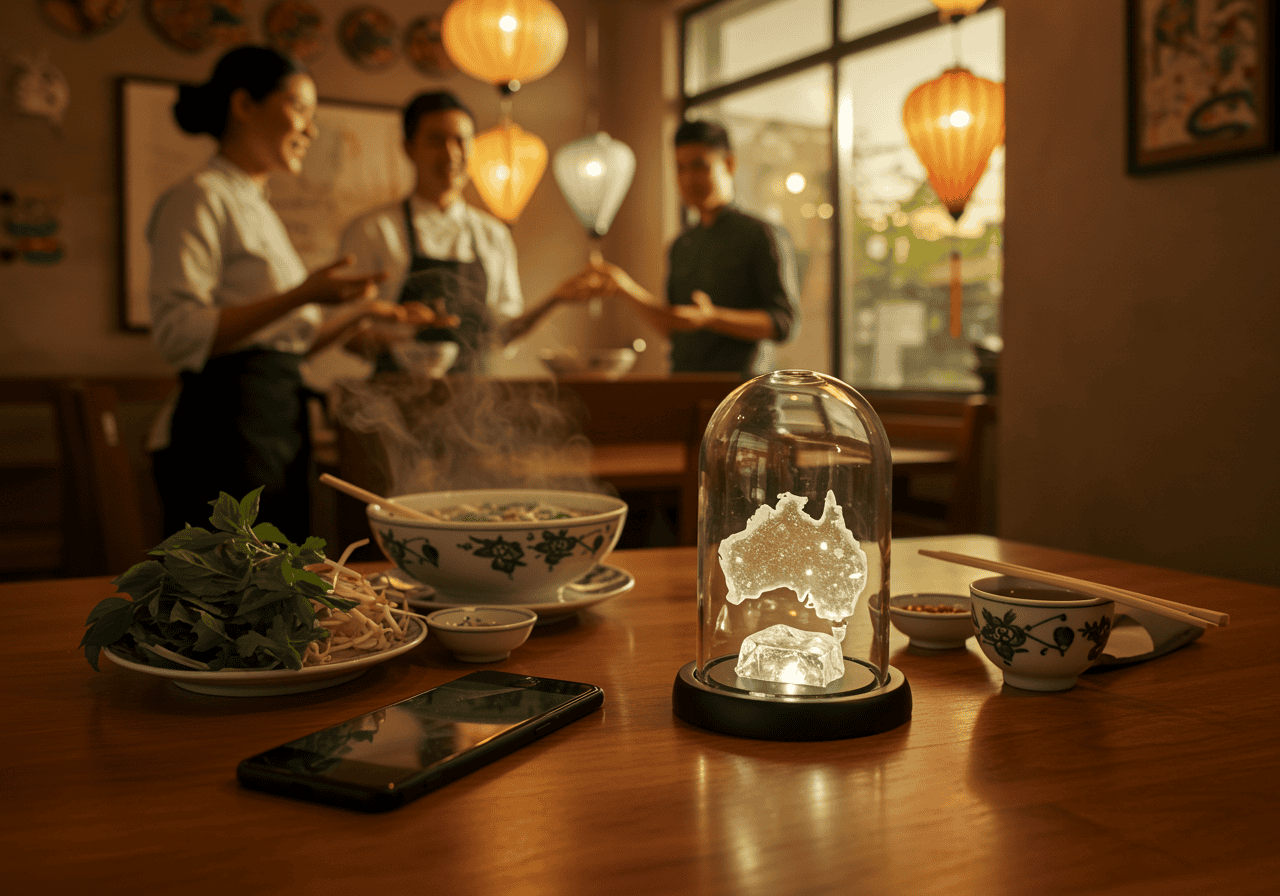
Australian Data Sovereignty is at the heart of why many Vietnamese restaurants should choose AiDial. All voice processing, recordings and transcripts are stored and managed on Australian soil, reducing exposure to foreign legal orders and ensuring alignment with the Privacy Act 1988 and the Australian Privacy Principles. For restaurants that collect payment details for bookings or manage customer preferences and dietary requirements, this onshore approach lowers compliance risk, strengthens data security and gives both owners and customers confidence that sensitive information is handled within familiar legal and regulatory frameworks.
Beyond data location, AiDial delivers genuinely local support and implementation. Our onshore team works with you to customise call flows, Vietnamese language prompts and culturally appropriate responses, and to integrate seamlessly with the Australian booking and POS systems restaurants already use. Local hosting means lower latency for clearer calls, faster failover in outages and support in AEST hours so issues are resolved quickly — reducing service interruptions that can cost busy dinner services bookings and upset customers.
The practical business benefits are clear: improved conversion of inbound calls to confirmed bookings, fewer no-shows through reliable onshore messaging and reminders, and lower compliance and reputational risk thanks to Australian Data Sovereignty. For single-site operators through to multi-site groups, AiDial scales to deliver measurable cost savings, higher table turnover and a trusted customer experience that resonates with the Vietnamese community and wider Australian clientele. Choosing AiDial means choosing a secure, locally supported AI voice solution that helps restaurants optimise revenue while keeping data safely within Australia.
Measuring Success: KPIs, ROI and Practical Implementation Tips
To measure the impact of AI voice calls you need a concise KPI dashboard that ties directly to revenue and customer experience. Track answer rate and average wait time to ensure callers are captured, booking conversion rate from calls to confirmed reservations, and language-match rate for callers who prefer Vietnamese. Monitor average handling time for resolved queries and the percentage of calls automatically handled versus routed to staff. Measure no-show rate before and after automated reminders, table utilisation and covers per service period, and repeat booking rate for loyalty. Include qualitative metrics such as customer satisfaction scores and feedback specifically about the voice interaction. Establish baseline figures over two to four weeks, then set realistic improvement targets, for example increasing answer rate to 95 per cent, cutting average wait time by half, and reducing no-shows by 30 per cent. Because AiDial processes and stores data onshore, all KPI reporting is compliant with Australian data sovereignty requirements, making metrics auditable and trustworthy for owners and regulators.
ROI calculations should combine labour savings, recovered revenue from fewer no-shows, and incremental income from additional bookings and takeaways. Start with simple arithmetic: estimate staff hours spent on calls per week and multiply by the fully loaded hourly labour cost to quantify annual call-handling expenses. Add the revenue uplift from fewer no-shows using average spend per cover and recovered covers per day. For example, a small restaurant with average spend of thirty five dollars per cover and thirty bookings daily that reduces no-shows from ten to four per cent will recover roughly two extra covers a week, equating to several thousand dollars a year. Factor in additional takeaway and walk-in capture from intelligent call routing. Compare total annual benefits against AiDial subscription and implementation costs to get payback period and ROI percentage. Remember to account for intangible benefits like improved customer trust and reduced compliance risk because all voice data remains on Australian soil under AiDial, which can materially protect revenue and brand reputation.
Roll out AI voice solutions in phases to reduce disruption and build staff confidence. Begin with a pilot during quieter shifts or a single service period for four to eight weeks, using the pilot to collect baseline KPIs and customer feedback. Configure language support and culturally appropriate phrasing with input from Vietnamese-speaking staff and test real calls. Integrate AiDial with your reservation system and POS so confirmations, amendments and cancellations are synchronised, and set clear escalation paths to human agents for complex requests. Train front-of-house staff on new workflows, how to interpret AI notes, and when to take over calls. Schedule weekly KPI reviews during rollout, then move to monthly optimisation meetings to tweak prompts, reminder timing and routing rules. Maintain a privacy checklist and emphasise Australian data sovereignty to reassure customers and staff that all voice data and recordings remain onshore. Use AiDial’s local support team for configuration, monitoring and continuous improvement to ensure measurable, sustainable gains.



Conclusion and Key Takeaways
Vietnamese restaurants can overcome common booking challenges by adopting AI voice call solutions that optimise reservation efficiency, offer Vietnamese language and cultural sensitivity, and intelligently route calls to capture more walk-ins and takeaway orders. Automated reminders reduce no-shows and maximise table turnover, while simple KPIs such as booking conversion rate, no-show rate and average covers per shift make it easy to measure success and calculate ROI. Practical implementation tips — start small, monitor performance, and iterate — help ensure a smooth transition and immediate business benefits.
AiDial combines these operational gains with a crucial advantage for Australian businesses: data processed and stored on Australian soil, protecting customer privacy, meeting compliance expectations and building trust with local customers. Backed by local support and proven outcomes in efficiency, cost savings and improved customer experience, AiDial is a practical choice for Vietnamese restaurants ready to grow bookings and streamline service. Book a Demo to see how AiDial can help you capture more bookings, reduce costs and improve customer satisfaction.