As Australia’s veteran population ages and more former service personnel choose to remain at home, demand for specialised, reliable home care is growing, bringing into focus the complex practical and clinical challenges of delivering truly person-centred support—from staffing and continuity of care across regional communities to effective monitoring of daily needs and medication regimes; this post explains how AI voice solutions can optimise daily care and monitoring through scheduled check-ins, real‑time alerts and voice-driven workflows that support medication management and clinical safety, while also reducing isolation by providing conversational AI that promotes social connection and mental wellbeing, and shows how providers can translate these capabilities into tangible business benefits such as improved efficiency, lower operating costs and better clinical outcomes; throughout we highlight the critical importance of Australian data sovereignty, explaining why keeping sensitive veteran information processed and stored exclusively on Australian soil strengthens security, aids compliance and builds trust, and we conclude with clear key takeaways to help providers evaluate how locally hosted AI voice solutions can enhance support for veterans while protecting their data.
The Growing Need for Veteran Home Care in Australia
Australia’s veteran cohort is ageing, with a growing share of ex-service personnel living into older age and managing multiple chronic conditions. Many veterans prefer to remain in their own homes where independence, routine and familiar surroundings support wellbeing. That preference increases demand for reliable, specialist home care that can deliver clinical oversight, regular welfare checks and social support without forcing relocation to institutional settings. For providers this translates into higher volumes of complex visits, longer care plans and the need for consistent documentation and follow-up. Digital tools, including AI voice solutions, can support these needs by enabling scheduled check-ins, timely alerts and conversational engagement that complements in-person care. Importantly, solutions built for this sector must earn trust; AiDial’s emphasis on Australian Data Sovereignty, with data processed and stored exclusively on Australian soil, helps veterans and their families feel confident their sensitive health information is secure and compliant with local regulations.
Many veterans live in regional and remote communities where access to specialist services and a stable aged care workforce is limited. Delivering person-centred care across dispersed locations challenges rostering, clinical handovers and timely monitoring, which can increase risk and administrative burden. Technology that supports remote monitoring and standardised voice-driven workflows helps bridge those gaps by automating routine check-ins, prompting medication reminders and flagging clinical concerns to central teams. This reduces travel pressure on scarce staff and supports consistent care across shifts and locations. For providers operating in regional Australia, relying on solutions that keep data onshore matters for both connectivity and legal compliance. AiDial’s Australian Data Sovereignty approach ensures that voice interactions and clinical notes remain within the national jurisdiction, simplifying compliance with state and federal health regulations and reinforcing community trust in digital care tools.
Recent policy reviews and the evolving funding landscape mean home care providers must deliver higher-quality outcomes with constrained budgets and rising regulatory expectations. The Aged Care Royal Commission and ongoing reform have sharpened focus on safety, documentation and consumer-centred services, while workforce shortages push organisations to find scalable ways to maintain standards. Scalable AI voice platforms can reduce administrative load, improve capture of clinical and consent information and enable faster response to risk events, translating into cost savings and better compliance. From a business perspective, adopting such technologies helps providers optimise staff time, reduce avoidable hospital transfers and demonstrate audit-ready records. Vendors that guarantee local control of sensitive data offer an additional commercial advantage; AiDial’s Australian Data Sovereignty ensures providers can modernise care delivery while meeting procurement, privacy and accreditation expectations specific to Australia’s veteran and aged care sectors.
Key Challenges in Delivering Person-Centred Support at Home
Delivering person-centred care to veterans at home is complicated by persistent workforce pressures. Many providers face staff shortages, high turnover and a casualised workforce, especially in regional and remote communities where a large proportion of veterans live. Those staffing challenges make it difficult to guarantee continuity of care and to sustain the trusting relationships that underpin good outcomes for older ex-service personnel, increasing the risk of missed visits, inconsistent support and administrative burden for clinical teams.
Clinical safety and information fragmentation are another core challenge. Medication regimes for older veterans are often complex, and when care notes are spread across paper charts, disparate motor systems and informal handovers, the chance of dosing errors, missed observations or delayed escalation grows. At the same time, many veterans have sensory, cognitive or mobility limitations that make traditional digital interfaces hard to use; accessible, voice-first interactions are required if technology is to genuinely support adherence, timely monitoring and trauma-informed engagement rather than creating new barriers.
Finally, regulatory, security and trust considerations shape every procurement decision for veteran care. Providers must meet Privacy Act obligations and often satisfy Department of Veterans Affairs and Defence-adjacent requirements, while veterans and their families rightly expect sensitive health information to be protected. Connectivity challenges in rural areas add another layer of complexity, meaning solutions must operate reliably even with intermittent networks. These realities drive demand for locally hosted, Australian-first systems that keep data onshore; AiDial’s AI voice approach, designed around Australian Data Sovereignty, addresses these concerns by ensuring sensitive voice and care data are processed and stored within Australia to support compliance, security and veteran trust.
How AI Voice Solutions Enhance Daily Care and Monitoring
Scheduled voice check-ins give providers a reliable, scalable way to confirm a veteran’s wellbeing without needing a carer’s physical visit every day. AiDial’s AI voice platform can make personalised calls at agreed times, using natural conversational prompts to verify mobility, appetite, mood and adherence to routines, and to capture structured responses for clinical review. These check-ins reduce missed contacts, free frontline staff for higher‑value tasks and create an auditable record that supports continuity of care across shifts and regional boundaries. Because the system is voice-first, it is accessible for veterans who struggle with screens or dexterity. Crucially, all interactions and recorded responses are processed and stored under AiDial’s Australian Data Sovereignty model, keeping sensitive veteran data onshore so providers can meet DVA and aged‑care compliance expectations while building trust with clients and their families.
AI voice solutions move beyond scheduled calls by interpreting responses and triggering real‑time alerts when issues are detected, significantly improving clinical safety. If a veteran reports dizziness, missed medication, falls or worsening symptoms, AiDial’s system can immediately escalate to nominated carers, on‑call clinicians or emergency services while supplying the contextual transcript and risk markers to inform response. The platform can also integrate with wearables and sensors to correlate voice reports with activity data, reducing false alarms and prioritising urgent cases. This capability shortens response times, reduces hospitalisations and provides a defensible audit trail for duty‑of‑care decisions. Maintaining all alerting logic and data handling within Australia under AiDial’s data sovereignty approach ensures secure, low‑latency processing that complies with local regulations and reassures families and stakeholders about their loved ones’ privacy.
Voice-driven workflows make daily monitoring truly accessible for veterans with mobility, vision or cognitive challenges by enabling hands‑free check‑ins, medication confirmations and simple care tasks via natural speech. AiDial’s solutions automate routine communications while feeding standardised information into care management systems so clinicians receive consistent, actionable updates without manual transcription. This integration streamlines handovers, reduces administrative burden, and helps teams quickly identify trends that require intervention. For providers operating across urban and remote sites, localised voice interactions delivered in familiar accents and languages improve engagement and adherence. By keeping all audio, transcripts and care records on Australian infrastructure through AiDial’s Australian Data Sovereignty commitment, organisations maintain control over sensitive records, simplify compliance with local legislation and foster the trust essential for vulnerable veterans to accept and benefit from AI‑enabled care.
Supporting Medication Management and Clinical Safety with Voice Automation
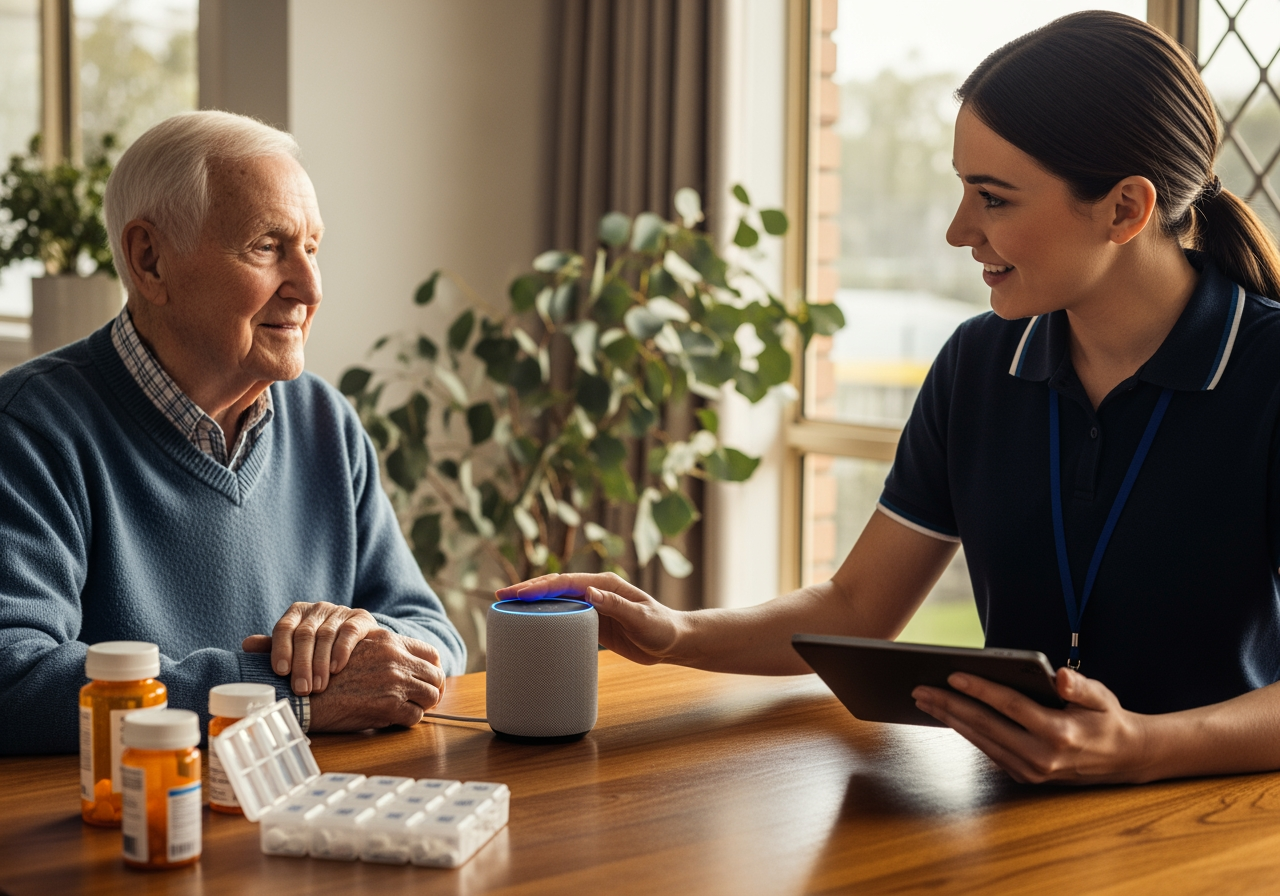
Medication regimes for veterans are often complex, with multiple prescribers, changes after hospital stays and a higher prevalence of chronic conditions that increase the risk of missed or incorrect doses. AiDial’s voice automation can schedule tailored medication reminders and guide the veteran through a step by step administration routine using natural, conversational prompts that are easy for people with limited tech experience. Voice confirmations and time-stamped adherence logs create an auditable record that integrates with clinical systems, helping clinicians and carers quickly see who has taken medication and when, which reduces the chance of double dosing or missed treatments.
Safety is strengthened through built-in verification and escalation workflows. AiDial can prompt simple checks such as confirming the medicine name, dose and timing, and can ask targeted follow up questions to detect potential adverse effects or confusion. If a response indicates a potential issue or a dose is missed, the system can automatically alert a nominated carer, clinician or on-call nurse and provide the relevant context and timestamp for faster triage. These voice-driven checks support medication reconciliation across care transitions and provide a clear audit trail that aids clinical governance and continuous quality improvement.
For providers, these capabilities translate into measurable business benefits including fewer medication-related incidents, reduced emergency presentations and more efficient allocation of in-person visits to those who need them most. Crucially, AiDial delivers these functions with Australian Data Sovereignty at the centre, keeping all voice interactions, clinical prompts and adherence data processed and stored on Australian soil. This local data handling not only meets the expectations of veterans and their families for privacy and trust, it also helps providers meet procurement and regulatory requirements while offering a secure, cost effective way to optimise medication management and clinical safety.
Reducing Isolation: Conversational AI for Social and Mental Wellbeing
Loneliness is a common and serious issue for veterans who remain at home, especially in regional communities where social networks can be thin. Conversational AI provides a dependable daily companion that can hold natural, respectful conversations, prompt gentle reminiscence, lead cognitive exercises and offer meaningful small talk at any hour. For providers, these voice interactions extend care beyond scheduled visits, maintaining regular connection without adding staff burden. AiDial’s voice platform is optimised to sound warm and familiar while remaining purpose-built for care workflows, so interactions are both engaging and clinically useful. Crucially, all voice processing and storage occur under Australian Data Sovereignty, which reassures veterans, families and funders that sensitive personal and health information is kept within Australia’s legal and security frameworks, increasing trust and uptake among users who are rightly concerned about privacy.
Conversational AI can be personalised to reflect a veteran’s preferences, service history and cultural context, creating more meaningful social engagement. AiDial’s solution supports custom conversation scripts, preferred names, local idioms and even veteran‑centred topics, helping to reduce isolation by making interactions feel relevant and respectful. The platform can also act as a bridge to family and community: initiating scheduled catch‑ups, recording short voice messages for loved ones, or coordinating simple group calls—functions that keep social ties active without adding complexity for carers. Because all data and voice recordings remain stored and processed in Australia under Australian Data Sovereignty, families and providers can collaborate with confidence, knowing that shared content is protected by local privacy standards and accessible to authorised clinicians and support workers when needed for care planning.
Beyond companionship, conversational AI can help detect changes in mood, cognition or behaviour through subtle language cues and interaction patterns, flagging risks such as depression or increasing isolation. AiDial’s platform integrates real‑time sentiment analysis with configurable escalation paths so alerts can be routed to clinicians, carers or crisis services according to local protocols. This proactive capability reduces the likelihood of emergency situations and enables timely interventions that improve clinical safety. For providers and funders, the result is measurable improvement in wellbeing metrics—higher engagement rates, reduced loneliness scores and fewer avoidable hospital admissions—translating into better outcomes and lower cost of care. Maintaining Australian Data Sovereignty throughout this process ensures that sensitive wellbeing signals are handled under local governance, supporting regulatory compliance and building trust with veterans and stakeholders.
Business Benefits for Providers: Efficiency, Cost Savings and Better Outcomes
AI voice automation helps providers significantly optimise staff time and workflows by taking on routine, repeatable tasks such as scheduled wellbeing check-ins, intake capture and post-visit documentation. That frees nurses and care workers to focus on complex clinical duties and in-person care, reduces unproductive travel between client homes in regional and remote areas and improves rostering efficiency. Streamlined voice-driven workflows integrate with existing clinical and scheduling systems so documentation is completed in real time, handovers are clearer and administrative burden is reduced across the organisation.
These efficiency gains translate directly into cost savings for both small and large veteran care providers. Reduced hospital readmissions from earlier intervention, lower overtime and travel expenses, and higher billable capture from accurate intake and follow-up all improve the bottom line. Voice interfaces also lower training time for new staff and scale capacity without proportional headcount increases, making it easier for providers to grow services sustainably while keeping operating costs predictable.
Crucially, better business outcomes are matched by measurable improvements in clinical safety and client satisfaction: higher medication adherence, faster detection of deterioration through real-time alerts and improved continuity of care across regional networks. Because AiDial processes and stores voice and clinical data onshore under Australian Data Sovereignty, providers benefit from stronger security, easier regulatory compliance and greater trust among veterans and their families—an essential advantage when demonstrating quality and compliance to funders, Defence and state regulators.
AiDial and Australian Data Sovereignty: Secure, Local AI Voice Solutions for Veterans
Veteran health and wellbeing information is highly sensitive, spanning medical histories, medication regimes and personal circumstances. For providers and families this raises two questions: who can access that data and under what legal regime is it protected. Australian data sovereignty means information is processed and stored on Australian soil and governed by Australian law, including the Privacy Act and Australian Privacy Principles. For veterans and home care organisations this minimises the risk of extraterritorial access or conflicting foreign legal demands, and supports stricter control over consent and disclosure. AiDial’s approach keeps voice interactions, transcripts and clinical alerts within local data centres, complemented by encryption and auditable access controls, so providers can demonstrate a clear chain of custody for sensitive records and veterans retain confidence that their personal information is governed by Australian standards.
Hosting AI voice services in Australia delivers practical advantages for veteran home care operations. Local data centres reduce latency so voice recognition and real-time alerts are faster and more reliable, an important factor for time-critical medication reminders and emergency escalations in regional and remote communities. Onshore hosting also enables redundancy and disaster recovery plans that align with Australian regulatory expectations, and simplifies integration with local electronic medical records and state health systems. AiDial specialises in deploying onshore voice models and fine-tuning workflows using Australian data sets, which improves accuracy for local accents and clinical phrasing. Beyond performance, having onshore technical support and operations teams means faster incident response, clearer SLAs and a single legal jurisdiction for contractual and compliance obligations, all of which help providers maintain continuity of care.
A focus on Australian data sovereignty translates directly into business benefits for veteran home care providers. Procurement and contracting are simpler when data residency meets federal and state procurement requirements and DVA sensitivities, reducing legal friction in tenders and partnerships. Demonstrable onshore data handling lowers organisational risk and potential breach costs, and strengthens trust with veterans, families and referrers, increasing adoption of voice-enabled check-ins and remote monitoring. Operationally, predictable hosting and support costs, plus the ability to scale voice services locally, improve financial forecasting. By choosing an Australian-centric AI voice partner like AiDial, providers gain a compliant, resilient platform that supports better clinical oversight, faster response times and stronger relationships with veterans and their carers, all key to delivering person-centred at-home care at scale.



Conclusion and Key Takeaways
As demand for veteran home care grows across Australia, providers must deliver person‑centred support that balances clinical safety, medication adherence, daily monitoring and social wellbeing. AI voice solutions augment carers by automating routine check‑ins, prompting medications, flagging clinical concerns and offering conversational companionship to reduce isolation, delivering timelier alerts and more consistent care. When these capabilities run onshore, AiDial’s Australian Data Sovereignty ensures sensitive voice data and AI processing remain within Australia, strengthening security, regulatory compliance and family trust.
For providers, this translates to measurable efficiency gains, cost savings and better outcomes for veterans, freeing clinical staff to focus on higher‑value care and improving referral and follow‑up capture in existing assessment pathways such as aged care assessment teams — see How Aged Care Assessment Teams Can Improve Client Outcomes for more context. To discuss how AiDial’s secure, local AI voice solutions can enhance your veteran home care services, Contact Us for a Consultation.