Australian psychology services face persistent access challenges, from long waitlists and missed referrals to inconsistent intake experiences that can deter clients at their most vulnerable, and that is where a locally‑hosted AI voice solution can make a practical difference; by using AiDial’s secure Australian AI voice to automate and intelligently triage enquiries and intake, practices can reduce delays, capture more referrals and ensure clients are routed to the right care sooner, while delivering operational efficiencies and cost savings that free clinicians to focus on care rather than administration. Crucially, these gains must sit within robust clinical safety, ethics and governance frameworks so that AI‑assisted interactions support clinicians, preserve therapeutic intent and provide clear escalation and audit trails for consent and decision making. At the same time, Australian data sovereignty is non‑negotiable for mental health information: keeping processing and storage exclusively on Australian soil strengthens privacy protections, regulatory compliance and client trust in a way offshore providers cannot match. Integrating a secure AI voice with existing practice management and telehealth systems means smoother workflows, fewer double entries, faster appointment bookings and a continuity of care that benefits both small practices and larger services. This post will explore how secure, locally hosted AI can improve client access and safety, unlock measurable efficiencies and cost savings for psychology practices, and outline practical governance steps and key takeaways for implementing AI voice tools with confidence.
Access challenges in Australian psychology services
Australian psychology services are operating under sustained workforce pressure as demand for mental health support continues to rise. Public clinics and many private practices face long waitlists driven by an ageing clinician cohort, uneven distribution of specialists across metropolitan and regional areas, and increasing presentations of complex comorbidity. Clinician time is further eroded by administrative tasks, phone triage and manual scheduling, which reduces capacity for face to face care and contributes to clinician burnout. For organisations this translates to lost revenue from unfilled appointments, higher no‑show rates and reputational risk when clients abandon help-seeking after long delays. Addressing capacity gaps requires both workforce investment and practical efficiency gains so that existing clinicians can spend more time on therapy and less on routine administration; this is where securely hosted AI voice tools can automate clerical work and free clinical time while preserving quality of care.
Referral pathways into psychology services are often fragmented, involving multiple handoffs between GPs, allied health providers, hospitals and private practices. Inconsistent intake forms, varying risk assessment practices and manual phone-based triage create opportunities for information loss, delayed follow-up and missed referrals—particularly for clients in crisis or those with complex needs. After-hours enquiries frequently go to voicemail, and message transcription or follow-up can be slow or inaccurate, increasing the chance that vulnerable people fall through the cracks. For employers and health networks this fragmentation reduces conversion of referrals into appointments and weakens continuity of care. Standardising intake, capturing accurate referral metadata and providing timely, empathic responses are practical priorities for improving access and reducing leakage across the pathway.
Access inequities in Australia reflect geography, digital exclusion and cultural barriers as much as clinical capacity. Regional and remote communities have fewer specialists and limited transport options, while some clients lack reliable internet or privacy at home for telehealth. Stigma, language diversity and differing cultural conceptions of mental health can deter early help-seeking. Compounding these barriers are legitimate privacy concerns: many clients and referrers are uneasy about sensitive mental health information being processed or stored offshore under unfamiliar legal regimes. That uncertainty can reduce uptake of digital intake or triage tools. For practices, signalling that personal health information remains within Australian jurisdiction and is handled under local privacy law is essential to building trust and encouraging broader adoption of technology-enabled access solutions.
How AiDial’s secure Australian AI voice improves client access
AiDial’s secure Australian AI voice provides an always-on, human-sounding entry point for clients and referrers, so calls and enquiries are handled promptly rather than being missed outside office hours. By automating routine questions, initial screening and referral capture with natural conversational flows, practices reduce friction at the first point of contact and increase the number of referrals successfully converted into appointments. Because all interactions are handled by a locally hosted system, clients and referrers benefit from the reassurance of Australian Data Sovereignty, which builds trust and reduces the reluctance some people feel about sharing sensitive mental health information with offshore providers.
At the heart of improved access is intelligent triage and structured intake. AiDial listens for key clinical and administrative details, applies configurable triage rules to identify urgency and appropriate care pathways, and flags risk indicators for immediate escalation to clinicians or crisis teams. The system compiles concise intake summaries and risk notes that arrive before a clinician engages, so clients are routed to the right level of care sooner and clinicians spend less time on manual screening. This model preserves therapeutic intent by supporting clinicians with actionable information rather than replacing clinical judgement.
Beyond clinical routing, AiDial drives practical operational gains that expand real access to care: automated appointment booking, dynamic waitlist management, reminders and callback scheduling reduce no-shows and shorten effective wait times, while consistent intake practices increase conversion of referrals. These efficiencies lower administrative costs and free clinicians to focus on treatment, improving productivity and patient throughput without compromising safety. Crucially, because AiDial processes and stores data exclusively on Australian soil, practices meet Australian privacy and health record expectations, strengthen relationships with referrers and clients, and ensure improved access sits on a foundation of robust local governance and security.
Clinical safety, ethics and governance for AI-assisted care
Integrating AI voice into psychology services must be governed by a clear clinical safety framework that preserves therapeutic intent and places clinicians at the centre of care. AiDial supports a risk‑based model where AI handles routine information gathering, appointment management and initial triage, while clinicians retain decision authority for clinical interventions. Safety controls include configurable escalation pathways, real‑time alerts for high‑risk responses, mandatory human review triggers and comprehensive interaction logs for clinical audit. These features reduce administrative load and minimise missed high‑risk cases by ensuring timely clinician involvement, which improves client safety and service timeliness. Crucially, automated pathways are clinically validated and regularly reviewed, allowing practices to balance efficiency gains with strict safeguards so that AI assists rather than replaces clinical judgement.
Ethical deployment of AI voice requires transparent consent practices, bias mitigation and culturally safe design. AiDial enables practices to present clear informed consent prompts at the start of voice interactions, record consent outcomes and offer multilingual and accessible options to accommodate diverse communities, including Aboriginal and Torres Strait Islander peoples. Systems are designed to surface explainable rationale for triage outcomes so clients and clinicians can understand and contest decisions where needed. Ongoing monitoring of model behaviour and targeted testing against demographic biases help reduce inequitable outcomes, while clinician oversight ensures that AI recommendations are contextualised within individual client histories. By embedding ethical controls and culturally appropriate pathways, practices can increase access without compromising respect, autonomy or fairness.
Strong governance underpins trust in AI‑assisted care and supports compliance with Australian regulation and accreditation requirements. AiDial provides enterprise‑grade role‑based access controls, immutable audit trails, encrypted storage and detailed reporting to demonstrate adherence to clinical governance frameworks and funder or regulator expectations. Hosting and processing exclusively on Australian soil aligns with Australian data sovereignty obligations, simplifying privacy compliance under the Privacy Act and state mental health legislation and reducing cross‑border data risk. Regular performance reviews, incident response procedures and staff training modules are supported by AiDial tools, enabling practices to measure safety KPIs, conduct external audits and rapidly respond to concerns. This governance maturity not only mitigates risk but also delivers operational confidence that frees clinicians to focus on therapeutic work while administrators meet accountability obligations.
Australian data sovereignty and the protection of mental health information
Mental health information is among the most sensitive categories of personal data, and Australian healthcare providers must handle it within the bounds of the Australian Privacy Principles and state health records legislation such as the Health Records Act (Victoria) and the Health Records and Information Privacy Act (NSW). Keeping data processing and storage on Australian soil directly supports these regulatory obligations by avoiding unnecessary cross-border transfers, making it simpler to demonstrate compliance with local retention, access and disclosure rules. AiDial’s secure Australian AI voice solution is designed to process voice interactions and store transcripts and metadata exclusively in Australian data centres, providing a clear data residency posture that aligns with legal and clinical responsibilities.
Offshore processing exposes psychology practices and their clients to a range of risks: differing legal regimes can allow foreign government access, incident response and privacy protections may be weaker, and cross-border transfers complicate consent and disclosure obligations. These factors increase the likelihood of regulatory scrutiny, contractual disputes and reputational harm that can undermine client trust. By contrast, a locally hosted AI voice platform eliminates many of those uncertainties—reducing legal exposure, simplifying vendor due diligence and giving clinicians and clients confidence that mental health information remains within Australian jurisdiction and subject to familiar protections.
Beyond residency alone, genuine protection requires technical and governance controls: strong encryption in transit and at rest, role-based access and authentication, comprehensive audit logs, defined retention schedules and local incident response and forensics. AiDial combines these controls with Australian data sovereignty, local support and service-level agreements so practices can demonstrate compliance during audits, meet procurement and accreditation requirements, and integrate AI-assisted intake into clinical governance processes. The result is practical protection for client privacy, reduced compliance burden for clinicians and a stronger foundation of trust that encourages timely engagement with care.
AI-driven triage and intake to reduce waitlists and missed referrals
AiDial’s secure Australian AI voice can be configured to manage referral capture and intake conversations around the clock, ensuring fewer missed opportunities and faster initial engagement. Using conversational voice prompts tailored for psychology services, the system collects essential referral details such as referrer information, presenting concerns, availability and consent to contact, then validates and structures that data for seamless handover to clinicians. Because interactions are held on infrastructure that adheres to Australian data sovereignty, sensitive mental health information never leaves local servers, supporting compliance with the Australian Privacy Principles. Continuous intake means patients or referring GPs can start the process outside clinic hours, reducing drop-off when callers meet voicemail. Captured data is presented in standardised formats that minimise transcription errors, accelerate triage decisions and allow practices to acknowledge referrals sooner, lifting referral capture rates and reducing the time between referral and first assessment.
Effective triage balances automation with clinician oversight; AiDial’s AI voice conducts structured risk screening to identify red flags such as suicidality, self-harm or severe deterioration, using evidence-based question sets approved by the practice. When risk indicators are present, the system immediately triggers predefined escalation pathways: urgent clinician callbacks, SMS alerts to clinical staff or routing to crisis services, while logging every step for audit and governance. Non-urgent cases are prioritised by symptom severity, functional impact and referral source, producing a ranked waitlist that clinicians can review and override. The human-in-loop design ensures clinical judgement remains central, with the AI handling routine screening and administrative triage so clinicians can focus on complex decisions. All screening outcomes and escalation actions remain stored on Australian servers to preserve confidentiality and to support clinical safety reviews and continuous improvement.
By integrating intake data with practice management systems, AiDial helps clinics convert referrals into appointments more efficiently and reduce bottlenecks that extend waitlists. The AI matches client needs to clinician specialisations, availability and modality preferences, automating bookings or placing clients on optimised waitlists where periodic reassessment occurs. Predictive analytics use historical intake patterns to forecast demand spikes by region or service type, enabling practices to adjust clinic hours, roster clinicians or deploy group programs proactively. Automated reminder calls and pre-appointment checks reduce no-shows and unmet referrals, improving clinic throughput. These operational efficiencies translate into cost savings and faster access for clients, while Australian Data Sovereignty ensures forecasting models and scheduling records remain within local governance frameworks, reinforcing trust with patients and referrers that their mental health information is managed securely.
Operational efficiencies and cost savings for psychology practices
Automating routine administrative tasks with AiDial’s secure Australian AI voice frees up front‑desk time and reduces the hours practices spend on phone triage, appointment booking and follow‑ups. By capturing enquiries 24/7 and managing reminders and rescheduling, practices see fewer missed referrals and no‑shows, which directly improves revenue capture and clinician utilisation. These operational gains translate into immediate cost savings by cutting overtime, reducing reliance on temporary staff and allowing existing teams to focus on higher‑value patient care rather than repetitive admin tasks.
Beyond labour savings, AiDial helps practices lower overheads associated with manual data handling and error correction; automated intake and accurate information capture minimise costly administration rework. Subscription‑style pricing and local implementation reduce unpredictable IT costs and integration headaches, while Australian Data Sovereignty cuts compliance overhead by ensuring data processing and storage remain onshore, reducing exposure to international privacy risks and potential regulatory penalties. Local support and quicker issue resolution also mean less downtime and lower vendor management costs compared with offshore solutions.
These efficiencies are measurable and scalable: shorter waitlists, faster time‑to‑first‑contact, higher appointment conversion rates and improved clinician billable hours all contribute to a clear return on investment. Integrating AiDial with practice management and telehealth systems automates end‑to‑end workflows, reducing manual reconciliation and improving data accuracy for billing and reporting. By delivering cost savings alongside secure, locally hosted AI that respects Australian Data Sovereignty, AiDial enables psychology services to grow access and capacity without sacrificing privacy, compliance or quality of care.
Integrating secure AI voice with practice management and telehealth systems
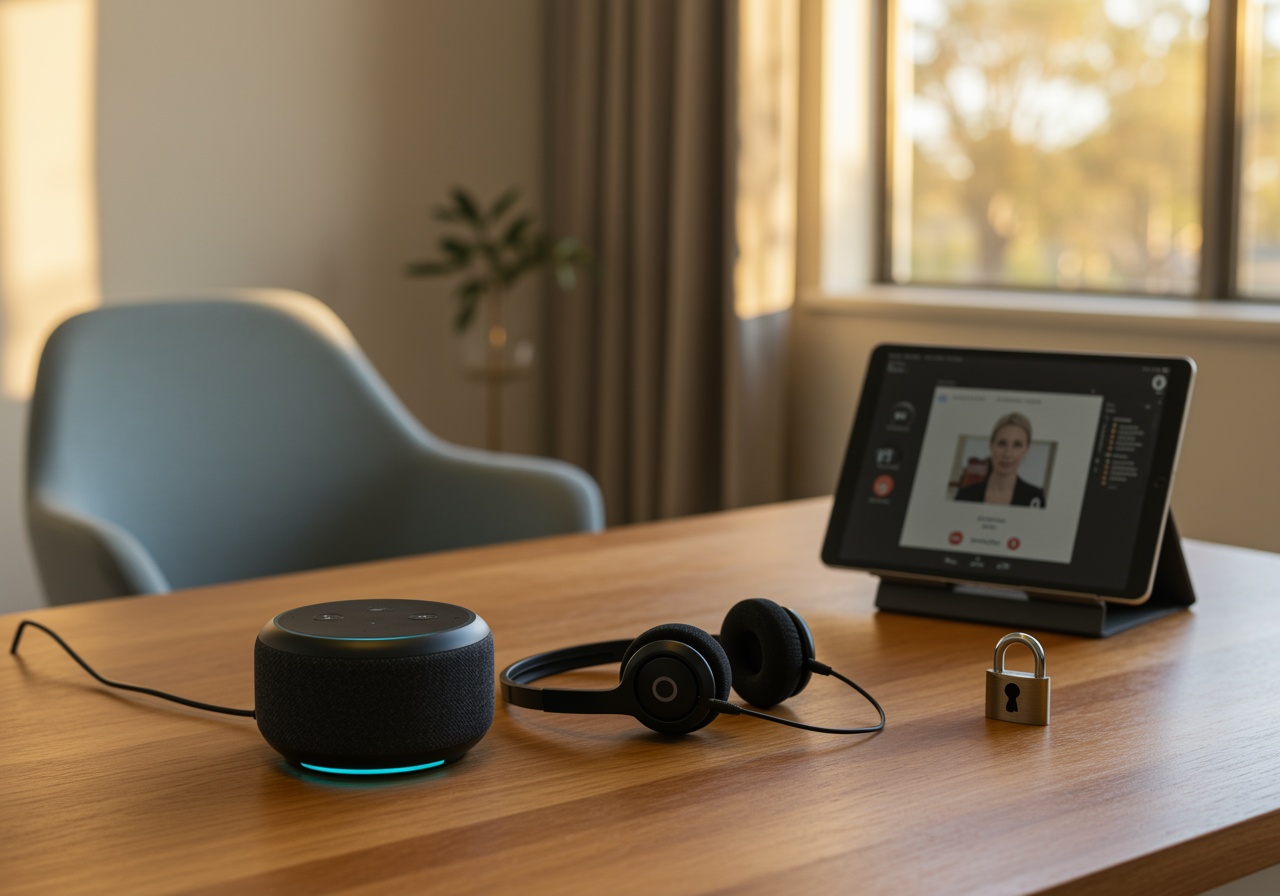
Integrating AiDial with existing practice management systems creates a continuous, secure data flow that removes repetitive manual entry and reduces administrative delay. Secure APIs enable intake responses captured by the AI voice assistant to populate client records, referral fields and clinical risk flags in real time, while preserving timestamps and consent metadata. Role based access ensures reception staff, clinicians and managers see only the fields they need, and an immutable audit trail documents every interaction for governance and clinical review. The integration supports automated appointment creation, waitlist prioritisation and outcome status updates so referrals are less likely to fall through the cracks. Because all processing and storage occur on Australian soil, practices maintain control of sensitive health information and satisfy regulatory and insurer requirements without sacrificing interoperability or workflow efficiency.
AiDial can orchestrate a smooth handover from voice intake to telehealth consultation, reducing friction for clients and clinicians. Prior to a scheduled video session the system can confirm client details, collect pre consultation questionnaires and flag any urgent clinical indicators so the clinician receives a concise briefing on arrival. When escalation is required AiDial can generate secure session links, send SMS or email reminders and attach intake summaries and consent records directly to the telehealth booking within the practice management system. This tight coupling minimises duplicated intake steps, shortens time to care and improves session readiness. Local hosting of all session metadata and transcripts within Australia gives practices confidence that sensitive mental health interactions remain protected under domestic privacy frameworks.
Successful integrations must be underpinned by robust security and compliance controls, and AiDial is designed to meet those demands while operating entirely within Australia. Data in transit and at rest is encrypted, access is governed by multi factor authentication and granular permissions, and all logs are retained for clinical governance and auditing. Local data residency simplifies compliance with the Australian Privacy Act and health record guidelines and eases contract negotiations with insurers and public referrers. Integration work is supported by Australian based implementation teams and service level agreements that reflect local business hours and clinical timetables, enabling rapid change management, incident response and tailored workflows that align with each practices clinical governance framework.



Conclusion and key takeaways
AiDial’s secure Australian AI voice solutions help psychology services overcome access barriers by automating triage and intake to reduce waitlists and missed referrals, while integrating smoothly with practice management and telehealth systems to streamline clinician workflows and cut operational costs. These benefits are delivered alongside robust clinical safety, ethics and governance measures so AI-assisted care remains clinician-led, auditable and aligned with best practice.
Crucially, Australian data sovereignty ensures sensitive mental health information is processed and stored on Australian soil, strengthening privacy, regulatory compliance and client trust. Book a Demo or Contact Us for a Consultation to see how AiDial can help your practice optimise access, protect patient data and deliver better outcomes.