Japanese restaurants operate in a competitive hospitality market where understanding guest booking behaviour — from last-minute sushi counter requests and group omakase bookings to dietary notes and preferred dining times — is essential to growing covers and revenue, and AI-driven voice calls from AiDial can lift reservation conversion rates by engaging callers conversationally and capturing intent in real time; by personalising dining experiences using natural language AI that recognises nuances in requests and makes tailored recommendations, restaurants can increase guest satisfaction and upsell appropriately, while automated call reminders significantly reduce no-shows and optimise table turnover by confirming arrivals and reallocating freed seats quickly; AiDial’s solution plugs seamlessly into existing POS and online booking systems so reservation data flows smoothly across your tech stack, and crucially all call processing and customer data are hosted on Australian soil, preserving customer trust and meeting local compliance requirements through strict Australian Data Sovereignty; together these capabilities translate into measurable ROI via cost savings on staff time, efficiency gains in booking and seating, and measurable revenue uplift from higher conversion and reduced empty tables, with practical takeaways that operators of small and large Japanese dining venues can apply immediately.
Understanding Guest Booking Behaviour at Japanese Restaurants
Japanese restaurants often see distinct booking rhythms that directly affect covers and staffing. Peak dinner times, weekday lunch rushes near business centres, late-night sushi counter requests and weekend group omakase bookings all follow different lead times and cancellation behaviours. Understanding whether guests book weeks in advance for special occasions or call last minute for bar seating helps managers optimise menus, rostering and table allocation. AiDial’s AI voice calls can detect and log these timing patterns automatically by analysing caller intent and booking urgency in real time, feeding that data into your reservation system for smarter capacity planning. Because AiDial processes and stores this information exclusively on Australian soil, you maintain stronger compliance with privacy expectations and reassure guests that sensitive booking details remain within local jurisdiction, which is especially important for repeat customers and corporate clients who prioritise data sovereignty.
Guests at Japanese restaurants frequently have nuanced requests that affect dining flow and guest satisfaction: allergies, pescatarian or vegetarian preferences, requests for a sushi counter seat, private-room anonymity, or celebratory extras like a sake pairing. Capturing these subtleties accurately at the moment of booking reduces errors in service and enables targeted upsells such as omakase upgrades or bespoke degustation pairings. AiDial’s conversational AI recognises natural language around dietary and seating needs, prompting clarifying questions and ensuring the reservation record includes actionable notes for front-of-house and kitchen teams. Keeping this personal and potentially sensitive information within Australia via AiDial’s local hosting not only strengthens customer trust but helps restaurants meet food-safety and privacy obligations under local regulation.
Communication channels and language preferences shape how guests engage and convert. Some customers prefer calling to confirm a delicate birthday arrangement or discuss menu substitutions, while others favour online booking. Japanese restaurants also deal with language nuances and honorifics that affect guest comfort and perceived service quality. Tracking repeat-guest indicators such as favourite dishes, typical party size and preferred seating lets venues personalise outreach and loyalty offers. AiDial’s AI voice calls capture these interaction signals and update guest profiles in your CRM, enabling tailored communications and improved retention. With data processing and storage confined to Australia, restaurants can confidently build detailed guest records without exposing personal data offshore, reinforcing both regulatory compliance and the hospitality relationship.
How AiDial AI Calls Boost Reservation Conversion Rates
AiDial AI calls boost reservation conversion rates by engaging callers in natural, conversational dialogue that feels human and responsive. Instead of forcing customers through rigid menus, our voice AI listens for intent — whether someone wants a last-minute sushi counter seat, an omakase experience for a group, or has specific dietary requests — and responds with relevant options in English or Japanese. This reduces abandoned calls and missed opportunities during busy service periods, and because the system operates 24/7, it captures bookings outside traditional hours when many customers look for last-minute availability.
Conversion improves further through contextual personalisation and seamless operational actions. AiDial can suggest suitable time slots, recommend add-ons such as sake pairings or degustation upgrades, and differentiate seating types like counter versus private room to match guest preferences, increasing average spend per booking. Crucially, AI calls integrate directly with your POS and reservation systems to lock a table in real time, send immediate SMS or email confirmations, and queue complex enquiries to staff when required — eliminating double-bookings, shortening handling times, and turning more enquiries into confirmed covers.
Trust and security are central to converting hesitant callers into confirmed guests, which is why AiDial’s Australian Data Sovereignty is a competitive advantage for hospitality operators. By processing and storing all call data on Australian soil, restaurants meet local privacy expectations and regulatory requirements, reassuring guests when they share contact and dietary details. That local hosting, combined with analytics that show reductions in abandoned calls, faster answer-to-book rates and measurable increases in covers and revenue, makes it straightforward to quantify how AI calls lift conversion and deliver a clear return on investment.
Personalising Dining Experiences with Natural Language AI
AiDial’s natural language AI listens for the small but vital details that define a Japanese dining experience and captures them automatically during calls. Whether a caller requests the sushi counter, asks for an omakase for six, mentions allergies like shellfish or notes a preference for shari texture, the system extracts intent and writes structured fields back to the reservation. This removes the need for staff to manually jot notes while juggling a busy service and reduces errors that lead to poor experiences. For businesses, that means more accurate covers, fewer last-minute seat changes and smoother service flow. Crucially, all captured guest data is processed and stored under Australian Data Sovereignty, giving restaurateurs confidence that sensitive dietary and preference information remains onshore and compliant with local privacy expectations.
During a conversational call, AiDial can make context-aware suggestions that feel natural rather than transactional. If a caller books a special occasion it can propose an omakase upgrade, pairing suggestions like seasonal sake or wagyu additions, and recommend timeframe adjustments to accommodate multi-course service. The AI surfaces options in a way that reflects the restaurant’s style and capacity, increasing average spend without burdening floor staff. By tailoring suggestions based on captured preferences and past visits, guests receive relevant offers that enhance the meal rather than disrupt it, lifting conversion and revenue. All recommendation logic and call interactions are executed on infrastructure that adheres to Australian Data Sovereignty, which helps protect guest trust when handling payment intents and personalised offers.
Personalisation compounds over time when repeat diners are recognised and treated according to prior preferences. AiDial creates reusable guest profiles from call interactions that record cuisine preferences, seating likes, dietary restrictions and special dates, enabling targeted outreach like anniversary offers or tailored menu previews. These profiles help restaurants increase repeat bookings and lifetime customer value while reducing onboarding time for returning guests. Because profiles are maintained within an Australian-hosted environment, owners can confidently use the data for loyalty programmes and direct messaging without exposing customer information to overseas processors. This local data stewardship supports compliance and builds trust among patrons who expect their dining preferences and personal details to stay secure on Australian soil.
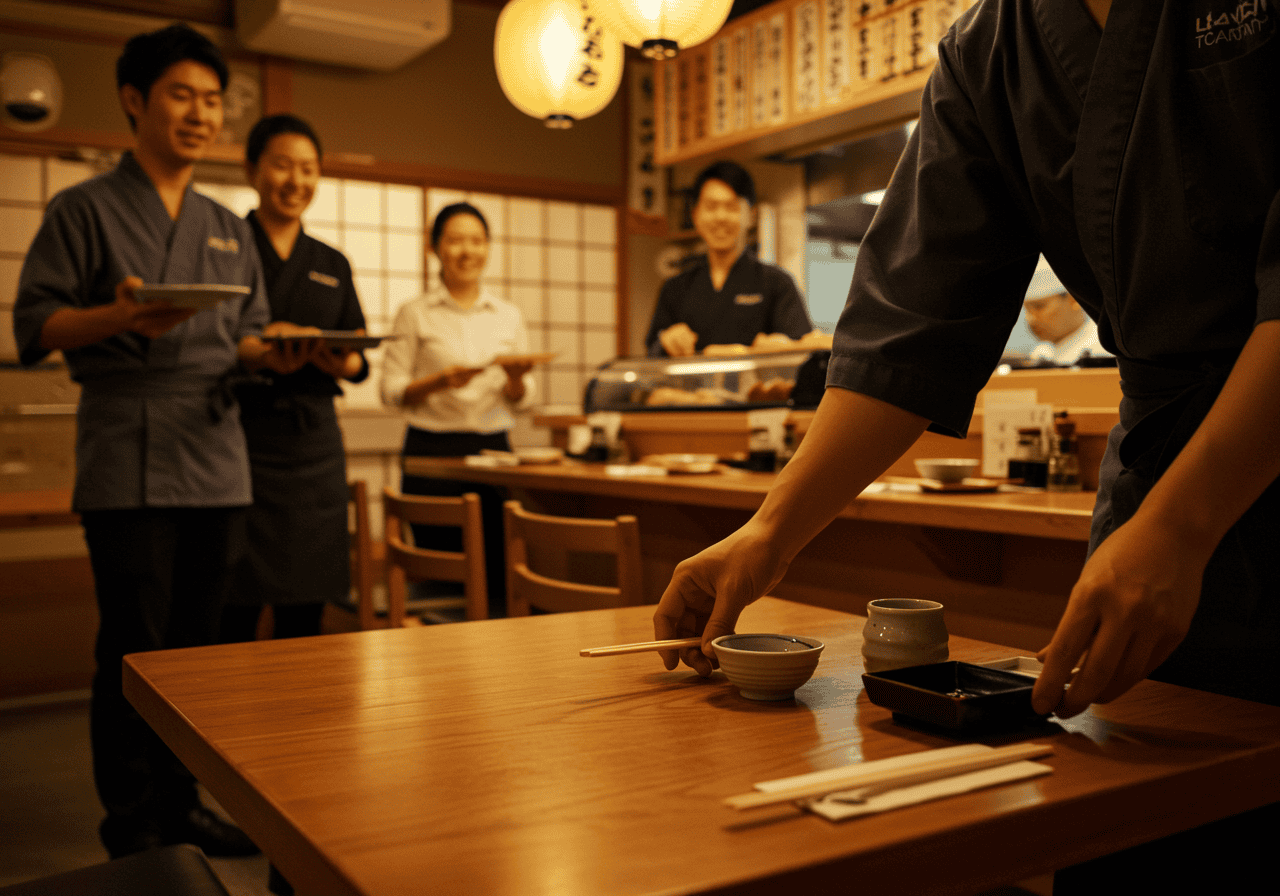
Reducing No-Shows and Optimising Table Turnover with Automated Call Reminders
No-shows are a persistent drain on revenue and service flow for Japanese restaurants where timely turnover of sushi counters and omakase seats is critical. AiDial’s automated call reminders tackle this by engaging guests in natural, two-way voice conversations ahead of service windows, confirming attendance, offering to reschedule, or collecting a deposit when required. Reminders can be timed to suit your operations – for example a confirmation 48 hours out and a prompt two hours before service – and can be paired with SMS for maximum reach. By reducing uncertainty around arrivals, restaurants can plan staffing and mise en place more accurately, lowering waste and avoiding empty covers during peak periods.
Where AiDial adds strategic value is in the intelligence of those reminders. The AI recognises intent and conversational cues, so a guest can tell the system they are running late, need to add a vegetarian or gluten-free request, or want to increase the party size, and AiDial will update the reservation in real time. Integration with your booking system and waitlist means cancelled or modified bookings are immediately releasable to walk-ins or stand-by guests, keeping tables full. Multilingual capability, including Japanese language handling and sensitivity to local accents and cultural preferences, improves confirmation rates and the guest experience while keeping all customer contact data securely hosted in Australia.
The practical outcomes are fewer empty tables, higher covers per service, and lower operational cost from better-aligned staffing and reduced food waste. Automated reminders also free front-of-house teams from repetitive follow-ups so they can focus on guest hospitality and upselling opportunities. Crucially, because AiDial processes and stores reservation and contact information on Australian soil, restaurants can confidently comply with local privacy expectations and regulations and build greater trust with guests who are more likely to share accurate contact details when data sovereignty is assured, further boosting reminder effectiveness and overall revenue uplift.
Seamless Integration of AI Calls with POS Systems and Online Bookings
AiDial integrates with a restaurant POS and online booking engine through secure APIs and webhooks to ensure real-time availability is always accurate. When an AI call confirms a reservation the system checks current covers, reserved tables and floor plans in the POS, then immediately writes the booking back to the booking platform so all channels reflect the same capacity. The two-way synchronisation prevents double bookings and enables the AI to offer the next best alternatives when the requested time is full. For multi-service venues offering omakase counters, private rooms and regular seating this level of synchronisation is essential to maximise covers while maintaining smooth front of house operations. Because the integration is bi-directional any manual adjustment by staff is propagated back to AiDial so callers receive up to date information and staff can trust the system without extra reconciliation steps.
Integrating reservation fields from AiDial into the POS allows detailed booking attributes to flow through the stack so staff and kitchen teams are prepared. Dietary notes, preferred seating, celebration occasions and group breakdowns captured in conversation become structured data points in the POS and booking platform, enabling personalised service on arrival. The same link can trigger pre authorised deposits or card holds where required for high value omakase bookings, with tokenisation handled according to PCI requirements so payment data does not leave the local secure environment. Upsell opportunities identified by the AI such as requesting chef specials or pairing a sake flight can be pushed as pre-orders into the POS, reducing lift for staff on arrival and increasing average spend. This mapping improves guest experience and increases revenue while keeping reconciliation simple at shift end.
AiDial designs integrations to be resilient to network hiccups and POS outages with offline queuing and reconciliation routines that sync when services resume, ensuring no lost bookings. Security is central to integration architecture, with encrypted transport, granular API keys and audit logs that record changes to bookings and who authorised them. Crucially all integration services, booking data and voice call processing are hosted on Australian soil to maintain data sovereignty, supporting compliance with the Australian Privacy Act and giving customers confidence that sensitive guest information stays local. Local hosting also enables faster incident response and tailored support from Australian teams who understand hospitality workflows and regulation. The result is a secure, reliable integration that improves operational efficiency and protects guest trust while delivering measurable business outcomes.
Protecting Customer Trust with Australian Data Sovereignty and Local Hosting
Reservation calls capture sensitive personal information – contact numbers, dietary requirements and allergy alerts, seating preferences and sometimes payment details for deposits. Keeping that information onshore matters to both guests and restaurants. AiDial processes and stores all voice recordings, transcripts and customer profiles exclusively on Australian soil, helping restaurants meet obligations under the Privacy Act and the Australian Privacy Principles, reducing cross-border data transfer risk and avoiding exposure to foreign surveillance regimes.
On the technical side, Australian hosting delivers security and reliability advantages that directly support reservation outcomes. AiDial combines end-to-end encryption, strict role-based access controls and defined data retention policies with redundant data centres in Australia to ensure low latency, consistent call quality and resilient backups. The result is dependable real-time intent capture and accurate personalisation during busy service periods, plus local support and service-level agreements that make troubleshooting and integration with POS and booking platforms faster and simpler.
For Japanese restaurants, the practical benefit is trust that converts into more bookings and better guest experiences. When diners know their allergy notes and payment details are handled locally and securely, they are more likely to share the information staff need to prepare and to accept reservation deposits, reducing no-shows and enabling appropriate upsells. Choosing AiDial for onshore data handling is therefore not just a security decision but a commercial one that protects brand reputation, supports compliance and gives diners the confidence to book and return.
Measuring ROI from AI Calls: Cost Savings, Efficiency Gains and Revenue Uplift
Start by defining the KPIs that matter for your restaurant: reservation conversion rate from inbound calls, no-show rate, covers per service, average spend per cover, call handling cost and staff hours spent on bookings. Establish a clear baseline over a representative period, for example four to six weeks, so you can compare like for like. Once AiDial is active, monitor the same KPIs daily and weekly using integrated dashboards that link AI call outcomes to your booking system and POS. Tag bookings that originated from AiDial calls so you can measure conversion and upsell performance directly. Because AiDial processes and stores data on Australian soil, reporting for audits and privacy obligations is straightforward, which makes baseline comparisons more reliable and reduces administrative friction when demonstrating compliance to stakeholders or regulators.
Translate KPI improvements into dollar terms to measure ROI. Typical value drivers are recovered covers from reduced no-shows, additional bookings captured by conversational AI, higher average spend through tailored upsells, and labour cost savings from fewer manual calls. Use simple formulas: incremental revenue equals additional covers multiplied by average spend; labour savings equals hours saved multiplied by hourly wage. Subtract AiDial subscription and integration costs to find net benefit. For example, an eight percent uptick in booking conversion and a five percent fall in no-shows can produce a meaningful monthly revenue uplift for a venue with steady demand. Include margin assumptions to estimate profit uplift rather than just top line. Also factor in reduced compliance and reputational risk from Australian data sovereignty which can avoid potential fines or remediation costs, effectively improving net ROI.
Robust attribution practices let you prove causation rather than correlation. Run A B tests where a portion of callers are routed through AiDial and the rest follow current handling, then compare bookings, upsells and no-shows over the test window. Link call transcripts to POS transactions to confirm which conversations led to higher spend or repeat visits. Use cumulative cash flow to calculate payback period: initial implementation cost divided by monthly net benefit. For most Australian restaurants the payback is measured in weeks to a few months depending on call volume and average spend. Finally, the local hosting advantage simplifies reporting for enterprise procurement and internal audits, shortening approval cycles and reducing the soft costs of compliance, which accelerates payback and strengthens the business case for wider roll out.



Conclusion and Key Takeaways
AiDial AI calls help Japanese restaurants turn insight into bookings by matching guest booking behaviour with natural language conversations that lift reservation conversion rates, capture preferences and personalise the dining experience. Automated call reminders reduce no-shows and optimise table turnover, while seamless integration with POS systems and online bookings ensures a smooth, data-driven flow from enquiry to cover. The combined effect is better customer experience, more efficient front-of-house operations and measurable revenue uplift from higher conversion and repeat business.
Critically, all of this runs with Australian Data Sovereignty and local hosting, protecting customer trust while meeting regulatory and security expectations. When you factor in cost savings from reduced manual calls, efficiency gains for staff and the revenue upside from improved bookings and table utilisation, AiDial becomes a practical, low-risk way to grow covers. Book a Demo to see how AiDial can tailor AI calls for your restaurant and start converting more reservations today.