For Australian businesses deciding how to fund essential equipment, from plant and vehicles to IT systems, the choice between leasing, hire purchase and outright purchase carries important trade-offs for cash flow, growth and operational flexibility, and successful strategies balance upfront costs with depreciation and tax planning while managing risk through appropriate insurance and contract terms; the right finance structure also depends on industry-specific needs and can be strengthened by integrating finance with operations via technology and trusted vendor partnerships to streamline procurement, maintenance and forecasting, and increasingly this integration includes secure onshore data handling to satisfy regulatory and customer expectations, which is why Australian Data Sovereignty matters and why AiDial AI voice solutions are a valuable part of the mix, automating customer interactions, capturing leads and ensuring call data is processed and stored exclusively in Australia to support compliance, trust and actionable business insight as you evaluate practical options and next steps.
Understanding Equipment Finance: Options for Australian Businesses
Australian businesses have a range of equipment finance structures to suit different cash flow, tax and ownership objectives. Outright purchase is simple ownership but requires capital and affects working capital. Chattel mortgage and finance lease let you acquire equipment with staged payments; a chattel mortgage transfers ownership once the loan is repaid whereas a finance lease often keeps ownership with the lessor and treats repayments as operating expenses. Hire purchase combines elements of loan and hire arrangements, with ownership transferring after final payment. Operating leases and equipment as a service focus on use rather than ownership, reducing balance sheet exposure and shifting maintenance responsibilities. Novated leases are common for vehicle fleets, while vendor finance or captive lender arrangements can speed procurement. Each option differs on GST treatment, depreciation, residual value risk and end-of-term flexibility, so businesses should match the structure to asset type and strategic goals.
Selecting the right finance option depends on cash flow, asset life, tax planning and operational needs. If conserving capital is critical, leasing or operating agreements preserve working capital and often include maintenance, which is useful for technology and plant that require frequent upgrades. If long-term ownership and depreciation benefits are a priority, chattel mortgages or hire purchase arrangements may deliver better total cost outcomes. Consider residual value risk for specialised plant that depreciates quickly, and evaluate lender covenants that could restrict future borrowing. Compare interest rates, fees, early termination clauses and who covers insurance and maintenance. For many Australian businesses the decision is also influenced by GST timing and ATO treatment of capital allowances, so seek tailored advice. Finally, verify that counterparties handle commercial and customer data in line with Australian data residency expectations to reduce regulatory and reputational risk.
Technology can make the difference between slow, paper-heavy funding and a streamlined approval process that improves conversion and reduces administrative cost. AI-enabled voice systems accelerate lead capture, automate customer verification, record consented call notes and push structured application data into finance workflows and CRMs. When these systems process and store data on Australian soil they reduce compliance complexity, support privacy obligations and strengthen trust with lenders, customers and auditors. AiDial’s AI voice solutions are designed for Australian businesses, keeping voice recordings, transcripts and analytics in-country to uphold Australian Data Sovereignty. That onshore approach helps finance teams verify applicant details faster, reduces time to funding, and lowers the operational burden of manual follow-up, delivering measurable efficiency gains and improved customer experience across equipment procurement journeys.
Benefits of Leasing versus Buying Equipment
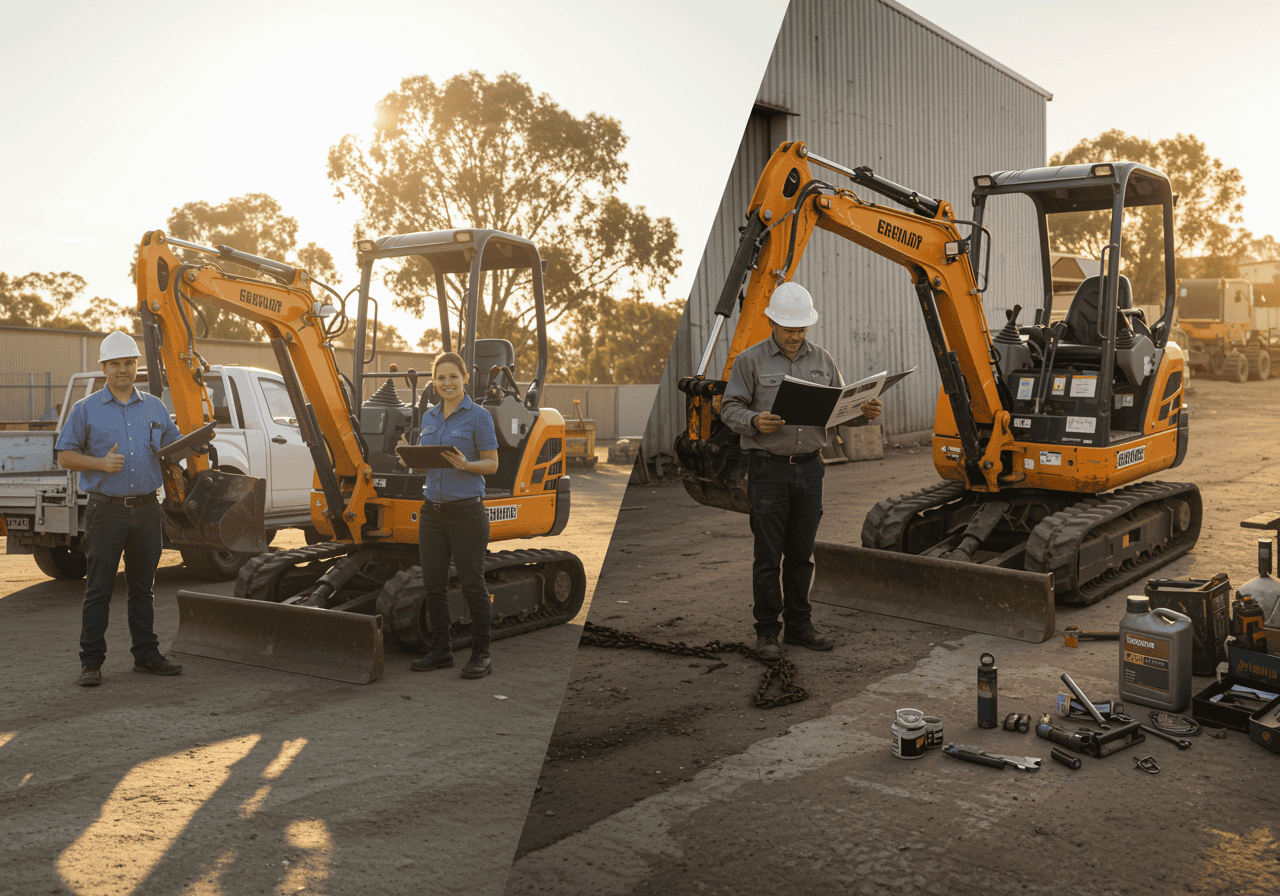
Leasing equipment often makes strong sense for Australian businesses that need to conserve cash and maintain flexibility. Regular lease payments turn a large capital outlay into a predictable operational expense, which simplifies budgeting and preserves credit capacity for growth initiatives. Leasing also enables faster access to new technology, so businesses can upgrade plant, vehicles or IT systems as needs change without carrying obsolescent assets on the balance sheet. For services delivered as a subscription, including AI voice capabilities, leasing or term-based models can accelerate deployment and reduce implementation friction.
Buying equipment delivers advantages where long useful life, full control and residual value matter. Ownership lets businesses claim depreciation and other tax benefits that can improve total cost of ownership over time, and it removes ongoing rental charges once the asset is paid for. Purchasing is often preferable when assets are highly customised, mission-critical or expected to be used well beyond typical lease terms, because it provides certainty over configuration and avoids restrictions that some lease contracts impose on modifications and usage.
Deciding between leasing and buying should be driven by cash flow priorities, asset lifecycle and operational strategy rather than a one-size-fits-all rule. Many Australian organisations adopt hybrid approaches, leasing short‑life or rapidly evolving technology while buying long‑life plant and equipment. Crucially, whichever route is chosen, integrating finance decisions with trusted vendors and secure technology partners multiplies the value — for example by pairing finance flexibility with AiDial’s AI voice solutions you can capture more leads, improve customer experience and streamline operations while ensuring Australian Data Sovereignty. Keeping voice and customer data processed and stored on Australian soil reduces compliance risk, builds customer trust and delivers a locally supported solution that complements either leasing or purchase strategies.
How Equipment Finance Improves Cash Flow and Business Growth
Equipment finance lets businesses convert large capital outlays into predictable, manageable payments that preserve working capital for growth activities such as hiring, inventory and marketing. By shifting heavy upfront costs into lease or hire purchase arrangements, companies maintain cash buffers and unused credit lines to respond quickly to new opportunities or seasonal demand. Predictable repayments simplify budgeting and improve lender and investor confidence, because future liabilities are clearer and easier to stress test. AiDial’s AI voice solutions further support cash flow by automating payment reminders, inbound payment queries and basic collections calls, reducing administrative overhead and days sales outstanding. Because these interactions and associated data are processed under Australian Data Sovereignty, businesses keep sensitive financial and customer information onshore, lowering regulatory and reputational risk while maintaining customer trust during sensitive conversations about payments and financing.
Choosing the right equipment finance structure can improve uptime and productivity by enabling more frequent upgrades and structured maintenance programs that match operational needs. Leasing or asset finance with bundled maintenance keeps machines performing and reduces costly breakdowns that interrupt production. Finance can also support flexible replacement cycles so technology and fleet assets stay current and efficient. AiDial adds value by automating service reminders, maintenance bookings and customer or supplier communications, ensuring scheduled upkeep happens on time and reducing administrative friction. Automated voice interactions capture service confirmations and telematics alerts, which feed into asset management systems to optimise utilisation rates. Having these voice records and maintenance logs stored and processed under Australian Data Sovereignty ensures compliance with industry rules and guarantees that sensitive operational telemetry remains onshore for auditability and secure decision making.
Equipment finance supports scalable growth by aligning payments with revenue generation and making it easier to trial new products, expand fleets or enter new markets without draining capital. Predictable financing terms improve financial forecasting and allow management to model multiple growth scenarios with confidence. Financing can also be integrated with sales and service processes to accelerate customer acquisition, for example by offering bundled finance options at the point of sale. AiDial’s AI voice solutions capture and qualify leads, book finance consultations and automate follow-ups, converting more enquiries into funded sales while reducing manual effort. The analytics from these voice interactions supply reliable pipeline data to finance teams, and because all customer and call data stays within Australian Data Sovereignty boundaries, businesses can confidently use these insights for credit assessments, marketing compliance and board-level reporting without exposing data to offshore legal regimes.
Choosing the Right Finance Structure for Your Industry
Choosing the right finance structure starts with a clear view of how the asset will be used in your specific industry. Capital-intensive sectors like mining, construction and transport often favour hire purchase or finance leases to capture depreciation and eventual ownership for long-lived plant and vehicles, while fast-moving technology or medical equipment is frequently better suited to operating leases or subscription models that keep balance sheets flexible and allow for regular upgrades. Seasonal businesses or those with cyclical revenue should match repayment profiles to cash flow, for example using stepped payments or balloon arrangements, so financing aligns with peak income periods rather than creating short-term pressure on working capital.
Operational requirements and service expectations also shape the best funding choice. Industries that require high availability and strict maintenance regimes, such as healthcare providers or logistics fleets, often benefit from bundled finance that includes maintenance, warranties and replacement clauses to reduce administrative overhead and operational risk. Where residual value is hard to predict, risk-sharing structures or vendor buy-back provisions can protect cash flow. Integrating finance with procurement and asset management systems improves forecasting and lifecycle planning, and AI-driven automation can streamline tasks like vendor communication, maintenance scheduling and invoice processing to reduce errors and administrative cost.
Data handling and compliance considerations are increasingly decisive when selecting finance arrangements, particularly for sectors dealing with sensitive customer information or regulated data. Choosing partners that guarantee Australian Data Sovereignty ensures that credit assessments, customer verification calls and contract records are processed and stored onshore, lowering cross-border privacy risks and simplifying compliance with the Australian Privacy Principles and industry regulations. AiDial’s AI voice solutions provide practical benefits here by automating secure, onshore customer interactions for approvals, identity checks and collections, improving approval speed, customer experience and audit readiness while keeping data within Australian jurisdiction.
Risk Management, Depreciation and Tax Considerations
Equipment risk is often operational rather than purely financial: unexpected breakdowns, misuse, or delayed maintenance amplify costs and disrupt cash flow. A structured risk-management approach combines appropriate insurance, clear warranty and service contracts, and proactive maintenance scheduling. AiDial’s AI voice solutions can automate service reminders, capture operator fault reports and create timestamped interaction logs that integrate with maintenance systems. Those logs provide auditable evidence for insurers and help demonstrate a rigorous risk-management regime that can reduce premiums and accelerate claim resolution. Crucially, when those interaction records and maintenance histories are processed and stored exclusively on Australian soil, businesses retain control over sensitive operational data and meet regulatory and customer expectations for Australian Data Sovereignty, strengthening compliance and stakeholder trust while improving equipment reliability and uptime.
The choice of depreciation method and effective life assumptions materially affects profit, tax and replacement planning. Businesses choose between prime cost and diminishing value methods, and accurate asset usage data supports the most appropriate allocation. AiDial’s AI-driven call and logging systems can capture usage patterns, operating hours and condition reports from operators, delivering objective data to inform effective life estimates and residual value projections. That granular evidence improves financial forecasting and helps justify depreciation positions during audits. Keeping this information onshore under Australian Data Sovereignty gives finance teams confidence that their asset records are secure, auditable and readily available to accountants and auditors, enabling better-informed capital expenditure decisions and smoother year‑end reporting.
Tax rules around equipment acquisition—GST treatment, instant asset write-offs, temporary full expensing, and fringe benefits tax for vehicle arrangements—require careful application to maximise benefit and avoid ATO scrutiny. Small business concessions and timing of purchases can materially change tax outcomes. Combining disciplined documentation with secure, accessible records is essential for compliance. AiDial’s AI voice solutions streamline capture of purchase confirmations, vendor discussions and acceptance checks, creating reliable transaction records that support tax positions and GST claims. Because these records are processed and stored within Australia, businesses preserve data sovereignty, reduce cross-border compliance risk and present a stronger evidentiary trail to tax advisers and regulators, helping unlock available incentives while maintaining robust governance.
Integrating Finance with Operations: Technology and Vendor Partnerships
Integrating finance with operations transforms equipment procurement from a fragmented process into a streamlined, intelligence-driven flow. By linking finance platforms with ERP, fleet telematics, maintenance scheduling and CRM systems, businesses gain real-time visibility over asset lifecycles, cash commitments and depreciation. This visibility reduces manual reconciliation, speeds up approvals and supports better forecasting so managers can optimise capital allocation and avoid costly downtime. AiDial’s AI voice solutions play a practical role here by automating routine call interactions that confirm deliveries, schedule inspections and capture payment intentions, feeding that data directly into operational systems to close the loop between enquiry and action.
Strong vendor partnerships are central to making technology integrations work in practice. Finance providers, equipment vendors and service partners that offer open APIs and standardised data formats enable automated credit checks, instant quotes and one-click ordering from within procurement workflows. When voice interactions are part of that ecosystem, AiDial can front-end customer conversations to capture qualified leads, verify details and initiate finance applications, accelerating conversion rates and lowering processing costs. Crucially, with Australian Data Sovereignty, all voice and transaction data stay onshore, which simplifies compliance with the Privacy Act and sector-specific regulations and builds greater trust with suppliers and customers.
The outcome for businesses is measurable: reduced administrative overhead, faster lead-to-order cycles, improved asset utilisation and clearer cash flow management. Practical steps to achieve this include selecting partners that prioritise integration capability, insisting on secure onshore data handling and piloting AI voice workflows to handle high-volume interactions such as payment reminders, service bookings and prospect qualification. By choosing technology and vendor partners that support seamless integration and respect Australian Data Sovereignty, organisations can unlock cost savings, improve customer experience and make equipment finance a strategic enabler of growth rather than a back-office burden.
Secure Financing with Australian Data Sovereignty and AiDial’s AI Voice Solutions
Equipment finance transactions involve highly sensitive information including identity verification documents, bank account details, business financials and transactional records. When this data crosses borders it increases exposure to foreign laws, variable security standards and complex breach notification obligations. Australian Data Sovereignty ensures that all voice interactions, call recordings and derivative data remain processed and stored on Australian soil under local law. That control reduces legal risk for lenders and vendors, simplifies compliance with the Privacy Act and Notifiable Data Breaches scheme, and strengthens customer confidence during funding conversations. For industries such as construction, transport and IT where equipment values are high and contractual risk is significant, keeping financing data onshore offers a clear advantage for auditability, incident response and regulatory reporting. Choosing finance partners who guarantee Australian Data Sovereignty therefore becomes a practical requirement for organisations that need to protect collateral, meet governance expectations and maintain trust with customers and financiers.
AiDial combines AI driven voice automation with onshore processing to harden every stage of the equipment finance journey. Automated verification and consent capture occur in secure interactive voice flows that feed into encrypted, role based storage hosted within Australia. Speech to text, voice biometrics and call analytics run on local models, creating verifiable audit trails that support compliance checks and dispute resolution without exposing data overseas. Integrations with lender CRMs and loan origination systems enable real time status updates and document attachment while reducing manual data entry and transcription errors. Secure IVR and intelligent routing ensure sensitive conversations are handled only by authorised teams, while built in retention policies align recordings and transcripts with legal and tax requirements. The result is a streamlined approval process that preserves security and traceability at scale, helping financiers and dealers move from enquiry to settled finance more reliably.
When equipment financiers and vendors adopt AiDial with Australian Data Sovereignty, the practical benefits are measurable. Faster verification and automated follow ups reduce time to fund and lower days sales outstanding, improving cash flow for both lenders and equipment suppliers. Operational costs fall as call volumes are handled by AI voice flows rather than expanded contact centre teams, and accuracy gains reduce disputes and administrative overheads. Onshore data handling also improves conversion rates by building customer trust, particularly for SMEs that are sensitive to privacy risks and regulatory scrutiny. For compliance teams the centralised, auditable record keeping simplifies reporting to ASIC and privacy obligations. Organisations gain a competitive advantage by offering a secure, customer friendly funding experience that scales across fleets, plant or IT procurement projects. Contact AiDial to discuss how onshore AI voice automation can be applied to your equipment finance processes and to book a demo.
Conclusion and Key Takeaways
Equipment finance offers Australian businesses flexible ways to acquire and manage essential assets, with options such as leasing, hire purchase, chattel mortgages and loans each suited to different cash flow, tax and growth objectives. Leasing can preserve working capital and reduce obsolescence risk while purchasing may provide ownership and tax benefits; choosing the right structure depends on industry needs, depreciation and GST implications, and your appetite for risk. Strong vendor partnerships and integrated technology reduce administrative friction, support maintenance and reporting, and turn finance into a growth enabler rather than a constraint.
Integrating secure technology is vital to realise those benefits. AiDial’s AI voice solutions capture leads, automate customer communications and streamline collections while ensuring all data processing and storage remains on Australian soil to meet compliance, security and trust requirements. That local data sovereignty, combined with automation, delivers efficiency gains, cost savings, improved customer experience and clearer audit trails. Contact AiDial to learn how locally hosted AI voice integrations can optimise your equipment finance processes and book a demo or contact us for a consultation.