Disability advocacy organisations are under pressure to deliver timely, personalised support while managing limited budgets and compliance obligations, and AI voice solutions provide a way to optimise support by automating routine workflows and improving staff productivity so teams can focus on complex advocacy work; inclusive voice interfaces extend access for people with sensory, cognitive or communication differences through clear speech recognition, simplified interactions and multimodal options, and automated intake and case management capture client details, update records and trigger referrals in real time to reduce administrative bottlenecks. Around-the-clock AI call handling improves responsiveness and crisis support by triaging urgent calls, delivering safety-first prompts and escalating to human responders when needed, all while lowering call centre costs to free up funding for frontline services. Crucially, choosing a partner that guarantees Australian data sovereignty means sensitive client information is processed and stored exclusively on Australian soil, supporting compliance with local privacy laws and strengthening client trust. For organisations evaluating voice AI, local integration, ongoing support and adherence to national accessibility and disability standards should guide selection so technology complements existing case management systems and workflows. This post will outline practical steps to implement voice automation, demonstrate measurable outcomes such as faster response times, reduced operating expenses and higher client satisfaction, and explain how partnering with a local provider like AiDial can deliver secure, compliant and inclusive voice solutions tailored to the unique needs of disability advocacy organisations.
Optimise Support: How AI Voice Transforms Disability Advocacy Workflows
AI voice systems can take on high-volume, repetitive interactions such as appointment booking, eligibility checks, reminders and initial call triage, freeing advocates to focus on complex casework that requires human judgement. By automating these workflows, organisations can reduce waiting times and administrative backlogs while preserving the human touch where it matters most. AiDial integrates with existing case management systems to log calls, update client records and trigger follow-up tasks automatically, creating consistent handovers between AI and human teams. Crucially, all call processing and records remain within Australian Data Sovereignty boundaries, giving organisations confidence that sensitive client details are stored and handled on Australian soil to meet privacy obligations and funder requirements. For disability advocacy organisations operating with limited staff and tight budgets, this combination of automation and local data control delivers measurable efficiency gains and improved client outcomes without compromising compliance or trust.
AI voice solutions can be configured to recognise and adapt to varied speech patterns, slower pacing and different communication preferences, making everyday interactions more accessible for people with sensory, cognitive or communication differences. Systems can present simplified prompts, offer multimodal alternatives such as SMS or email follow-ups and switch languages for culturally and linguistically diverse clients, all while remembering individual preferences across interactions. AiDial specialises in tailoring voice scripts and interaction flows to reflect the accessibility needs of a client cohort, ensuring consistent and dignified engagement. Because AiDial processes and stores interaction data under Australian Data Sovereignty, organisations can personalise services securely, maintain client consent records locally and meet Australian privacy standards, which strengthens trust with clients and funders while improving uptake of support services and continuity of care.
Beyond call handling, AI voice platforms generate structured data from conversations through transcripts, categorisation and trend detection, turning daily interactions into actionable intelligence. Advocacy managers can use these insights to identify recurring issues, prioritise service lines, tune referral pathways and design targeted training programs to address common advocacy challenges. Real-time analytics also support smarter rostering by forecasting peak enquiry times and allocating staff accordingly, which reduces burnout and ensures specialist advocates are available when complex matters arise. AiDial provides dashboards and reporting tools that operate within Australian Data Sovereignty, ensuring analytical outputs and call records remain secure and compliant. This local data residency reduces legal risk when sharing aggregated insights with funders or partners and helps organisations demonstrate impact and resource efficiency to stakeholders.
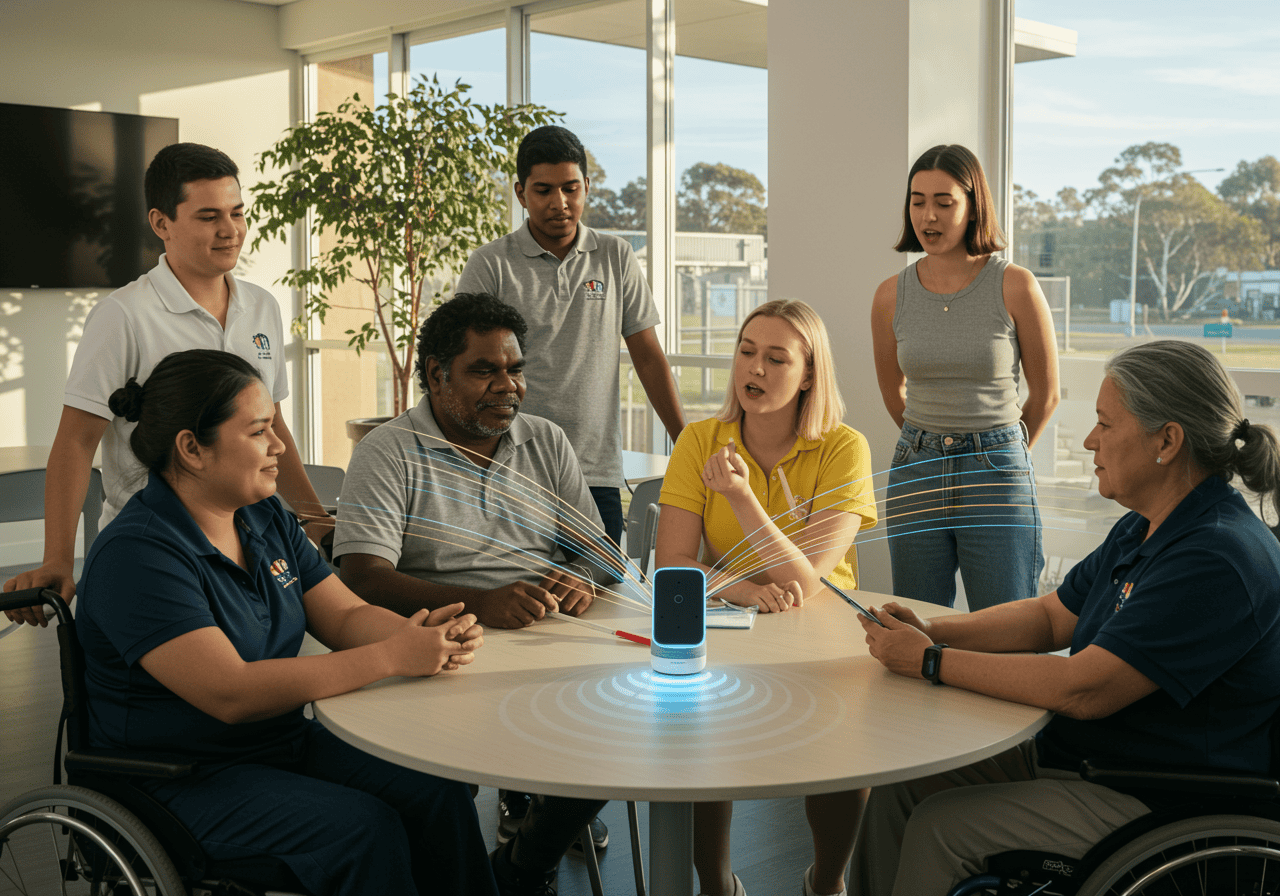
Addressing Access Barriers with Inclusive AI Voice Interfaces
Many people who need disability advocacy support face practical access barriers: hearing or vision impairment, cognitive processing differences, communication disorders, or unfamiliarity with digital forms. Inclusive AI voice interfaces reduce those barriers by offering clear, conversational speech that adapts to the user. Features such as adjustable speech rate and volume, simplified language prompts, real-time captioning and transcripts, and multimodal handovers to SMS, email or web chat mean clients can choose the channel that works best for them. By removing complex menus and using short, plain-language interactions, AI voice systems make it far easier for people with diverse needs to access information, lodge concerns and receive timely referrals without getting stuck in administrative friction.
AiDial’s AI voice platform is designed to be practical for Australian disability advocates: voice models are tuned for local accents and common speech patterns, prompts are customisable so organisations can embed person-centred language and cultural sensitivities, and integrations support assistive technologies such as screen readers and augmentative communication devices. Multilingual support and interpreter handover options help reach culturally and linguistically diverse clients, including Aboriginal and Torres Strait Islander communities, while routing rules enable smooth escalation to human advocates when conversations become complex. These capabilities let teams scale inclusive triage and routine follow-ups without compromising the personalised support that sensitive cases require.
Trust is critical when working with vulnerable clients, which is why keeping voice interactions and transcripts on Australian soil matters. AiDial’s commitment to Australian Data Sovereignty ensures recordings, transcriptions and any analytics are processed and stored locally, simplifying compliance with NDIS requirements, privacy laws and organisational governance while reassuring clients and funders. The result is improved uptake and engagement from clients who might otherwise avoid digital channels, faster intake and case resolution, and more efficient use of limited advocacy resources so staff can concentrate on high-impact, specialist work.
Streamlining Intake and Case Management through Automated Voice Solutions
AiDial’s conversational AI voice intake replaces lengthy manual phone forms with guided, accessible dialogue that captures core client details, consent and contextual notes in a single call. The system uses clear speech recognition and adaptive prompts to suit callers with sensory, cognitive or communication differences, and supports alternative flows for carers or advocates. Responses are transcribed and normalised into structured fields so every intake item auto-populates your case management system, reducing data entry errors and freeing frontline staff to focus on advocacy. Built-in verification steps and consent capture meet privacy expectations from the moment of contact, while multilingual and slow-speech options improve inclusion. Because AiDial processes and stores all voice and transcription data in Australia, organisations benefit from Australian Data Sovereignty, providing clients and funders confidence that sensitive personal information stays onshore and subject to local regulation and oversight.
Automated voice interactions keep cases moving without adding administrative load: follow-up calls confirm outcomes, intake triggers create new cases, and voice-detected urgency flags immediate escalation to a clinician or senior advocate. AiDial integrates with CRMs and specialised case management platforms to update case notes, change statuses and schedule appointments in real time, while tagging referrals for external services such as NDIS planners or allied health providers. Triage logic can run safety-first checks during calls, insert mandatory escalation prompts and produce concise handover summaries for human teams so nothing is lost in transfer. These automations reduce turnaround times, improve responsiveness for vulnerable clients and ensure consistent workflows across distributed teams, delivering measurable efficiency gains and better support outcomes.
Reliable case management depends on accurate records, clear accountability and demonstrable compliance. AiDial creates timestamped, searchable transcripts and metadata that are linked directly to client files, providing an auditable trail for case reviews, reporting and funder requirements. Role based access controls and encryption combine with onshore hosting to meet Australian privacy and disability sector standards, helping organisations demonstrate duty of care and data handling practices during audits or reviews. Storing and processing voice data exclusively in Australia under AiDial’s Australian Data Sovereignty model minimises jurisdictional risk and strengthens trust with clients, families and funders. Consolidating intake, updates and analytics into a secure, locally hosted platform also reduces duplication, lowers administrative costs and enables teams to reallocate time toward high value advocacy work.
Enhancing Responsiveness and Crisis Support with 24/7 AI Call Handling
Around-the-clock AI call handling gives disability advocacy organisations the continuous safety net they need to respond to urgent situations without relying solely on after-hours staff. AiDial’s voice solutions can triage incoming calls in real time using safety-first prompts and risk-scoring logic, escalating high‑risk contacts immediately to on‑call clinicians or emergency services where consent and protocols permit. Customisable scripts ensure interactions remain trauma‑informed and accessible, while automated transfers, SMS confirmations and callback scheduling reduce the chance of missed or delayed responses during critical incidents.
Beyond immediate triage, 24/7 AI handling improves the quality of crisis handovers to human advocates by capturing structured, time‑stamped summaries, consent notes and key risk indicators at the point of contact. This creates a clear audit trail for duty of care and regulatory reporting while reducing the administrative burden on frontline staff who would otherwise have to assemble information under pressure. Faster capture and handover of accurate details leads to quicker interventions, better client outcomes and less staff burnout from unpredictable after‑hours workloads.
Keeping all call audio, transcripts and metadata within Australia under AiDial’s Australian Data Sovereignty model is critical for trust, compliance and fast incident response — data remains governed by Australian Privacy Principles and aligns with NDIS expectations for handling sensitive information. Hosting and processing locally also means quicker technical support, rapid policy updates and lower compliance risk compared with offshore systems. For organisations looking to optimise responsiveness, reduce overtime costs and scale safe crisis support, AiDial’s Australia‑centred AI voice platform provides a secure, auditable and practical way to deliver 24/7 protection to clients and peace of mind to advocates.
Protecting Client Data and Trust with Australian Data Sovereignty
Disability advocacy organisations handle highly sensitive personal and health information that is subject to the Australian Privacy Principles and specific sectoral obligations such as NDIS record-keeping and reporting. Keeping data processed and stored on Australian soil through AiDial’s Australian Data Sovereignty guarantees simplifies compliance by aligning data flows with domestic law, retention requirements and mandatory reporting timelines. This localised approach reduces the complexity of cross‑border data transfers and the exposure to overseas legal regimes, making it easier to demonstrate lawful handling of client information during audits or investigations. AiDial’s AI voice solutions are configured to capture consent, maintain immutable audit trails and support fine‑grained access controls, all of which help organisations meet their regulatory obligations while maintaining the confidentiality and dignity of people seeking advocacy support.
Technical safeguards matter as much as policy. AiDial’s platform is purpose‑built to operate within Australian data centres, combining encryption in transit and at rest, role‑based access control, multi‑factor authentication and comprehensive logging to reduce the risk of unauthorised access. Onshore hosting also enables faster incident response, locally governed disaster recovery and predictable latency for clearer AI call interactions — critical for people with communication differences. Regular security testing, vulnerability management and support for independent compliance assessments help organisations demonstrate due diligence. By keeping processing and storage within Australia, AiDial minimises cross‑border transfer dependencies and provides a clear chain of custody for voice records and transcripts, supporting secure integrations with local CRMs and case management systems.
Trust is essential for advocacy relationships, where clients often share highly personal and vulnerable information. Australian Data Sovereignty is a practical trust signal: it reassures clients, carers and funding bodies that information is managed under Australian privacy standards and supported by local teams. AiDial helps organisations capture explicit voice consent, surface clear retention and access policies during intake, and provide quick responses to access or correction requests. Localised support means training, policy guidance and incident management are delivered within the same legal and cultural context, improving timeliness and clarity when issues arise. This transparency and responsiveness not only protects clients but also strengthens an organisation’s reputation, making it easier to secure funding, partnerships and community confidence while focusing staff time on advocacy work rather than data governance headaches.
Reducing Costs and Reallocating Resources for Greater Impact
AI voice automation from AiDial reduces recurring operational costs by taking on high-volume, low-complexity tasks such as appointment reminders, eligibility checks and routine enquiries. That lowers the need for overtime, after-hours staffing and large physical call centre footprints, cutting facility and rostering costs. By automating predictable call flows and outbound follow-ups, organisations also reduce no-shows and time spent chasing incomplete information, creating ongoing efficiencies without sacrificing service quality.
Those cost savings free up budget and people-hours to be reallocated to direct advocacy, complex casework and community outreach where skilled human intervention delivers the most value. Teams can spend more time supporting clients with nuanced needs, training staff in specialised practices and building partnerships with service providers. Reduced administrative load also helps prevent staff burnout and improves volunteer retention, multiplying the impact of existing human resources across the organisation.
Keeping all voice interactions and records onshore under AiDial’s Australian Data Sovereignty further reduces indirect costs associated with cross-border data transfer risks, complex contractual controls and external compliance audits. Onshore processing and local support simplify governance, lower legal exposure and make accreditation processes more straightforward, translating into tangible savings. Combined with AiDial’s ability to integrate with existing case management systems, organisations benefit from predictable, scalable pricing and reduced implementation and maintenance overheads, enabling funds to be invested directly into improved services for people with disability.
Selecting an AI Voice Partner: Local Integration, Support and Compliance
When selecting an AI voice partner, organisations must make Australian Data Sovereignty a non negotiable criterion. Disability advocacy work commonly involves sensitive health and personal information subject to the Privacy Act and Australian Privacy Principles, and many funding or regulatory frameworks expect clear controls over where data is stored and processed. Choosing a provider that keeps voice recordings, transcriptions and analytics on Australian soil reduces legal complexity, simplifies audits and reporting, and minimises the risk of inadvertent international data transfers. Beyond legal compliance, local data residency strengthens client trust, a critical consideration for vulnerable people and their families. Look for explicit documentation of data centre locations, encryption standards, role based access controls and audit logs, and for a partner that will support breach notification obligations. AiDial specialises in onshore processing and storage, helping advocacy organisations meet compliance obligations while protecting the confidentiality and dignity of clients.
An effective AI voice solution must integrate smoothly with the case management, CRM and telephony systems your organisation already uses so frontline staff avoid duplicate data entry and workflows remain uninterrupted. Prioritise partners that offer flexible APIs, standard connectors, single sign on options and configurable data mapping so intake calls, referrals and appointment updates flow directly into client records in real time. Integration should also consider accessibility needs, ensuring transcripts, call summaries and alerts are presented in familiar formats for advocacy teams and partner services. Crucially, insist that integrations preserve Australian Data Sovereignty so sensitive client information does not leave the country during transmission, processing or storage. Local engineering support for deployment reduces time to value, lowers integration costs and helps tailor prompts, prompts routing and fallback actions for crisis scenarios. The result is fewer administrative bottlenecks, faster triage and better outcomes for clients with minimal change to existing IT investments.
Long term success with AI voice depends on the partner relationship after go live. Choose a provider that offers onshore support, dedicated account management and training tailored to advocacy workflows so staff and volunteers adopt the technology with confidence. Local teams can run co design workshops, accessibility testing with clients, and regular reviews of call flows to refine intent recognition and escalate rules where necessary. Ongoing model tuning should be done using Australian held and governed data to preserve sovereignty and ensure updates respect privacy and consent models relevant to vulnerable cohorts. Measurement frameworks and dashboards delivered by the partner should be hosted onshore and designed to track service outcomes such as reduced wait times, referral completion rates and staff time saved. That combination of local support, training and continuous improvement helps organisations realise efficiency gains and redirect resources toward complex advocacy work while maintaining the highest standards of trust and compliance.



Key Takeaways for Disability Advocacy Organisations Implementing AI Voice
Implementing AI voice enables disability advocacy organisations to streamline intake and case management, deliver more responsive 24/7 support, and remove access barriers through inclusive voice interfaces — all while freeing staff to focus on high-value advocacy work. The result is tangible business outcomes: improved client experience, measurable efficiency gains, and cost savings that can be reallocated to frontline services. Choosing a local partner matters — Australian Data Sovereignty ensures client information is processed and stored on Australian soil, strengthening security, regulatory compliance and community trust while simplifying integration with existing systems and local support channels.
For organisations seeking to scale impact without compromising privacy or accessibility, AiDial’s Australian data-sovereign AI voice solutions offer a secure, compliant and practical path to modernise operations. Contact us for a consultation or book a demo to see how AI voice can be tailored to your workflows and deliver better outcomes for the people you support.