





Stop losing opportunities from missed calls and after-hours enquiries.
Operate with confidence, knowing your data is hosted locally and meets all privacy laws.
Direct integration with your calendar and CRM systems. Every appointment and lead is automatically captured and organised, saving hours of admin work.
Meet any customer demand by instantly scaling to manage peak enquiry volumes and business growth, without the overhead of extra staff.
Enjoy uninterrupted customer service without sick days, holidays, or staff turnover disruption. Your AI specialises in consistent, reliable support around the clock.
Save up to 70% compared to the cost of full-time reception staff and office space.
Empower your customers to book, reschedule, or cancel appointments anytime over the phone. Your AI agent seamlessly manages your calendar without any human intervention.
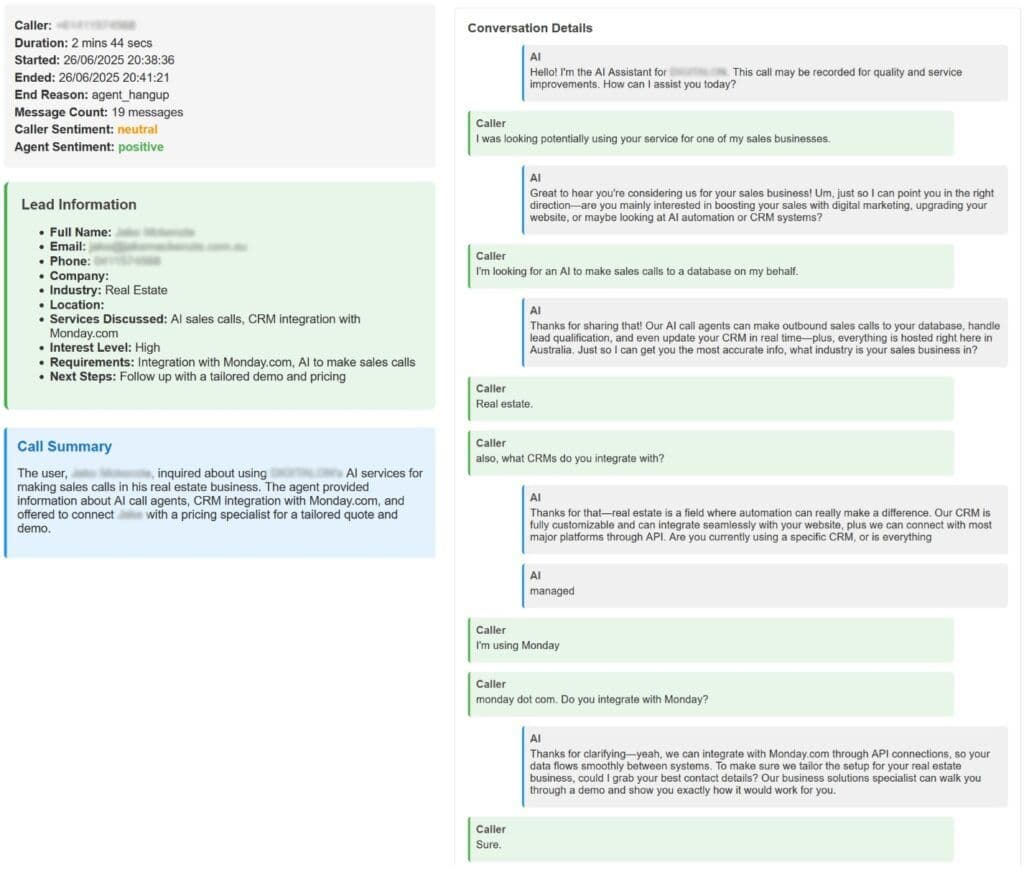
Instantly log call details, summaries, and outcomes in your CRM. Keep your customer records perfectly up-to-date and trigger automated workflows based on real-time call data.
Your AI agent can ask targeted questions to qualify leads over the phone, scoring them based on your criteria and routing high-value prospects directly to your sales team.
For organisations with strict sovereignty, isolation, or procurement requirements, AiDial can be deployed as a dedicated Australian voice AI environment. Core services, data stores, networking, and access controls are provisioned for your organisation, giving you stronger separation, tighter governance, and a deployment model suited to government, healthcare, and other security-sensitive operations.
Natural conversations don’t have awkward pauses. Our AI is designed to replicate that seamless flow. Because every component of the AiDialâ„¢ platform is hosted locally, we can process conversations with near-zero delay. This means your customers get an immediate, intelligent response every time, leading to higher satisfaction and more productive calls.
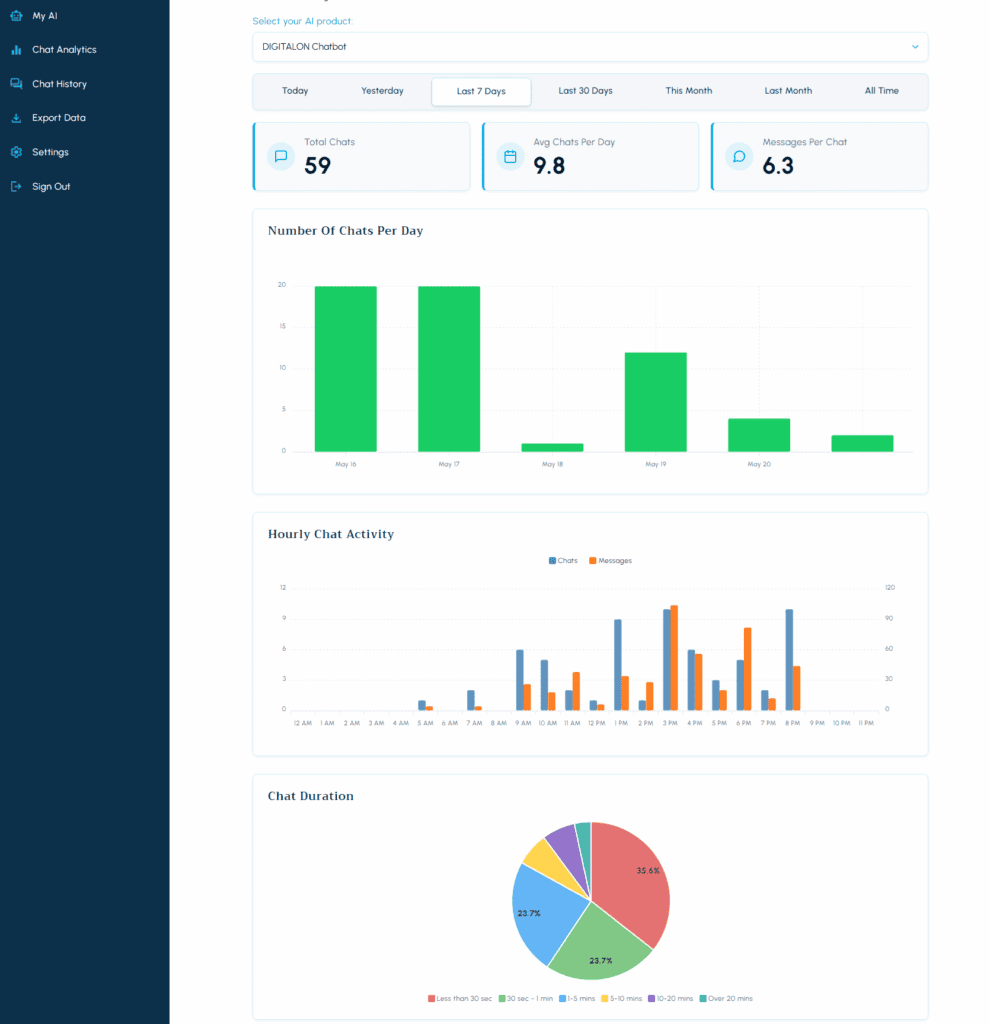
Our analytics dashboard turns your call data into a strategic asset. Easily visualise performance, understand customer engagement at a glance, and download complete call histories to make smarter, data-driven decisions.
Tell us your needs and discover how the AiDialâ„¢ platform can provide a more intelligent, secure, and cost-effective communication solution.
Yes. AiDial can answer after-hours and public-holiday calls using your approved practice rules. It can provide opening hours, capture messages, route urgent matters according to your escalation process, and direct emergencies to the appropriate emergency pathway such as 000 where required.
Yes, when connected to a supported booking or practice management system. AiDial can check availability, collect the required details, create bookings, reschedule or cancel appointments where your rules allow it, and only confirm the change when the connected system confirms it.
Yes. New patient enquiries can follow an intake flow, while existing patient calls can follow booking, message, recall or handover workflows. For record-specific actions, AiDial can ask for approved details and use system matching or identity checks before changing or discussing appointment information.
Yes, if those options are configured in your booking system. AiDial can ask for the preferred practitioner, appointment type, location, day and time, then offer available options or safe alternatives based on the live availability rules exposed by the connected system.
AiDial follows a safe fallback workflow. It can capture the caller’s request, notify your team, offer a transfer where available, or arrange staff follow-up. If the system cannot confirm a booking or update, AiDial should not tell the caller the appointment has been changed.
Yes. AiDial can transfer calls to reception, nurses, practitioners or an after-hours contact based on caller intent, business hours and your escalation rules. It can pass on useful context before or during the transfer, while clinical emergencies should follow your approved emergency instructions.
Yes. AiDial can send SMS or email confirmations, intake forms, telehealth links, missed-call follow-ups or internal notifications where those workflows are configured and permitted by your privacy and consent settings.
AiDial can be configured for Australian healthcare workflows with consent prompts, access controls, retention settings, redaction and Australian data-hosting options. Your practice remains responsible for its privacy policy, clinical governance and deciding which call types the AI may handle.
Yes. AiDial supports configurable consent workflows, including express consent for higher-risk settings such as healthcare. If a caller declines recording or transcription, the call can follow your approved path, such as transfer, continue unrecorded, or end the call.
AiDial can use controlled access, secure transport, encryption, retention controls and redaction for sensitive information. We configure which recordings, transcripts and reports are stored, who can access them, how long they are retained, and which details should be masked or excluded.
Yes, where identity checks are configured. AiDial can use caller lookup, patient-detail matching, security questions, SMS codes or keypad entry before protected actions such as finding, rescheduling or cancelling an appointment. Ambiguous matches should be handed to staff rather than guessed.
No. AiDial is designed for reception, administration and approved information workflows, not diagnosis or clinical advice. It can answer from approved practice information, explain administrative processes, book appointments, take messages and escalate clinical or urgent matters according to your rules.
Yes, depending on the system and available API access. AiDial supports healthcare booking integrations such as Cliniko, Halaxy and PracSuite, plus calendars, SMS, email, webhooks and custom APIs. See our voice AI integrations page for more detail.
Yes. AiDial can answer from approved FAQs, website content, service information and patient instructions that you provide. We keep responses grounded to approved material and define when the assistant should transfer, take a message or tell the caller to speak with a clinician.