Indigenous health services across Australia often struggle with language, cultural and access barriers that limit engagement and timely care, and AiDial’s AI voice technology can help bridge those gaps by enabling culturally safe, locally tailored patient interactions that respect language preferences and community norms; by co-designing solutions with Indigenous communities and local health services we ensure the technology is appropriate and accepted, while keeping all processing and storage on Australian soil under AiDial’s Australian Data Sovereignty model preserves privacy, meets compliance obligations and builds trust; practical uses such as remote monitoring, personalised appointment reminders and proactive outreach can increase follow-up, capture more patients into care and reduce no-shows, and when integrated thoughtfully into ACCHOs and Primary Health Networks these voice solutions can be scaled into existing workflows to optimise workforce time, deliver cost savings and produce measurable improvements in health outcomes and service efficiency.
Addressing Communication Barriers in Indigenous Health Services
Indigenous communities across Australia speak many languages and dialects, and English proficiency varies widely, creating real barriers to understanding health advice and service options. Health messages that are literal translations can miss cultural nuance or use idioms that confuse recipients, reducing participation in screening, follow up and chronic disease management. AiDial can support multilingual voice interactions that are tailored to community language preferences and local speech patterns, enabling information to be delivered in plain language and familiar phrasing. By working with communities to record local vocabulary and expressions, voice systems can increase comprehension and engagement while reducing the risk of misinterpretation. Critically, keeping all processing and storage on Australian soil under AiDial’s Australian Data Sovereignty model reassures communities that recordings and language data remain within local jurisdiction, supporting trust, compliance and culturally safe data handling.
Cultural safety is central to effective Indigenous health care, and automated communications must honour community protocols, kinship structures and preferred ways of interacting. A failure to reflect cultural norms can damage relationships and reduce uptake of services. AiDial emphasises co-design and configuration of AI voice interactions so that conversational style, tone and information sequencing align with community expectations and local health centre practices. Systems can be set to prompt for human follow up when complex cultural context is detected, and to enable easy handover to local clinicians, preserving relational continuity. The combination of locally appropriate voice design and Australian Data Sovereignty further supports trust, because communities and health services retain control over how sensitive information is handled and who can access recordings and transcripts.
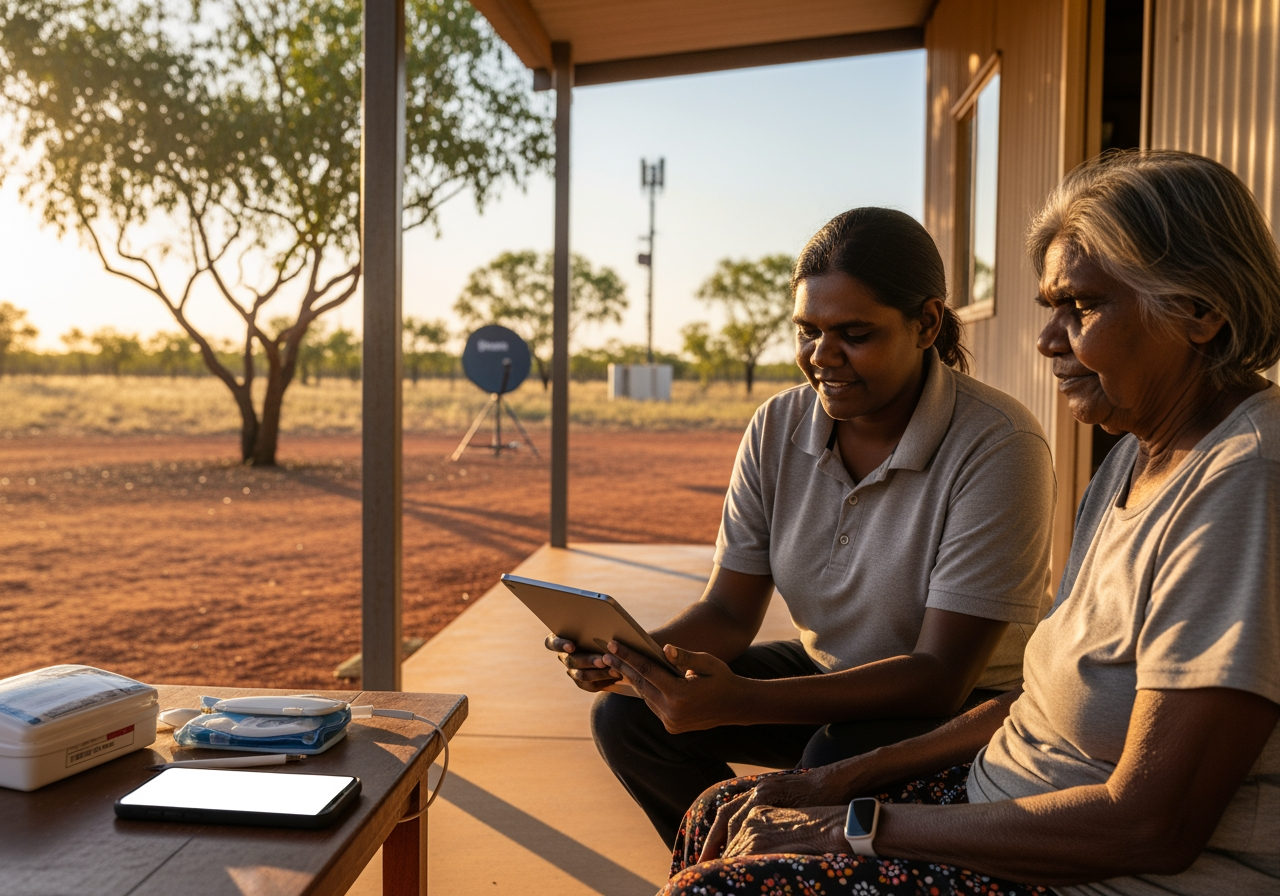
Many Indigenous communities live in remote or regional locations with limited broadband, low smartphone penetration or inconsistent power, making app based solutions impractical for routine outreach. Voice calls remain the most accessible channel, and well designed AI voice systems can deliver reminders, triage conversations and simple monitoring without requiring high speed internet. AiDial’s solutions are optimised for telephony, able to operate over basic mobile and landline networks to maximise reach. This approach reduces missed appointments, improves follow up for chronic conditions and lowers travel burden for patients and clinicians. Hosting voice services and data within Australia reduces latency and ensures continuity of service while meeting regulatory and community expectations for local data handling, supporting sustainable, scalable access improvements for health providers and their communities.
AiDial’s AI Voice Solutions for Culturally Safe Patient Engagement
AiDial’s AI voice agents are configured to speak in plain, locally relevant language and can be trained to use regional phrasing, pacing and culturally appropriate greetings so conversations feel familiar rather than clinical. These agents support two-way interactions that confirm understanding, capture consent and triage routine needs — booking or rescheduling appointments, reminding patients about medications, and collecting simple check-ins for remote monitoring. Built-in escalation pathways hand callers through to an Aboriginal health worker or clinician when the interaction requires human judgement, ensuring automation complements rather than replaces trusted local care.
The platform lets Indigenous health services customise voice personas, message content and call flows so communications respect cultural protocols, gender preferences and preferred times for contact. Local community recordings can be incorporated to deliver messages in community languages or with familiar voices, helping overcome language barriers and boosting engagement. Importantly, this approach keeps communities in control of how they are contacted and what information is gathered, supporting culturally safe interactions that protect dignity and strengthen trust.
From an operational perspective, AiDial’s solution increases appointment attendance and follow-up through timely, conversational reminders and proactive outreach while freeing clinical staff from routine phone work so they can focus on complex care. All voice processing and data storage occur onshore under AiDial’s Australian Data Sovereignty model, so sensitive health information remains within Australia for stronger privacy, regulatory compliance and community confidence. For ACCHOs and primary health networks this translates into measurable efficiency gains, reduced cost per contact and better capture of patients into ongoing care pathways.
Designing Culturally Appropriate AI with Indigenous Communities
Successful AI for Indigenous health must be developed through genuine community-led co-design rather than imposed as a technology-first solution. That starts with early and sustained engagement with elders, Aboriginal Community Controlled Health Organisations and local health workers to define priorities, risks and success measures. Co-design workshops should be run on Country, use culturally appropriate facilitation and ensure decision making rests with community representatives. AiDial supports this approach by providing flexible AI voice prototypes that can be adapted during co-design cycles and deployed in low-risk pilots for rapid feedback. Keeping model training and call processing onshore under AiDial’s Australian Data Sovereignty model reassures communities that recordings and metadata remain within Australia, which is essential for building trust and meeting legal and cultural expectations. Iterative co-design ensures the final service aligns with community needs, improves uptake and embeds local governance at every stage.
Designing culturally appropriate AI requires deep attention to local language use, storytelling styles and non-verbal cues that vary across communities. Practical steps include collaborating with local language speakers to develop scripts, testing phrasing for cultural safety and offering voice options that reflect community preferences rather than generic synthetic voices. AiDial enables bespoke voice models and phrase libraries to be created with community consent, and all speech data used for tuning is processed and stored in Australia in line with Australian Data Sovereignty. This onshore approach allows communities to retain control over recordings and to request removal if needed. Careful tuning reduces clinical jargon, honours cultural protocols around timing and content, and ensures the AI supports health workers rather than replacing interpersonal care. The result is more respectful, relevant interactions that increase engagement and adherence to care plans.
Robust governance and clear consent processes are central to culturally appropriate AI deployment. Communities should define data governance frameworks that specify who can access recordings, how long data is retained and mechanisms for revocation of consent. AiDial works with partners to embed community oversight, audit trails and configurable retention rules that comply with Indigenous Data Sovereignty principles and Australian privacy law. Equally important is investing in capacity building so local staff can operate, monitor and iterate the system; this includes training health workers to interpret AI outputs, manage exceptions and lead continuous improvement. Local employment in system support roles strengthens community ownership and creates sustainable expertise. By combining community-led governance, transparent consent models and onshore data controls, services can offer secure, accountable AI voice support that complements culturally safe clinical care.
Protecting Privacy and Trust through Australian Data Sovereignty
For Indigenous health services, where privacy and cultural sensitivity are paramount, keeping voice interactions and patient data within Australia is not just a technical choice it is a governance imperative. Australian Data Sovereignty means call recordings, transcriptions and analytics are processed and stored on Australian soil under Australian law, reducing exposure to foreign legal regimes and cross-border data access. That alignment simplifies compliance with the Australian Privacy Principles and state and territory health record legislation, and supports obligations around My Health Record and other clinical systems commonly used by ACCHOs and primary health networks.
Beyond legal compliance, Australian Data Sovereignty directly supports Indigenous Data Sovereignty and community-controlled approaches to information. Localised processing allows AiDial to implement culturally appropriate data stewardship practices demanded by communities and service providers, such as tailored consent models, community approval workflows, strict access controls and data minimisation by design. Hosting and governance within Australia also makes audits, reporting and transparency far more achievable for community partners, enabling ACCHOs to maintain ownership and oversight of sensitive health information.
The practical benefits for health services and patients are clear: stronger privacy protections build trust, and trust increases engagement with outreach, appointment reminders and remote monitoring that rely on voice interactions. Maintaining data residency with AiDial reduces regulatory and reputational risk, lowers the cost and complexity of cross-border compliance, and enables faster incident response and local support. For Indigenous health programs seeking secure, culturally safe technology that respects local governance and boosts patient participation, Australian Data Sovereignty is a decisive advantage.
Practical Use Cases: Remote Monitoring, Appointment Reminders and Outreach
AiDial’s AI voice capability enables practical remote monitoring for chronic conditions and post-discharge follow-up by using regular, low-bandwidth voice check-ins that patients can answer on any phone. Calls can be delivered in community languages and phrased with culturally safe prompts co-designed with local Elders, encouraging honest reporting of symptoms, medication adherence and social needs. Responses are analysed locally to flag deterioration or urgent needs, triggering instant escalation to ACCHO clinicians or a nominated care coordinator. Keeping processing and storage on Australian soil under AiDial’s Australian Data Sovereignty model reassures communities and services that personal health information remains under local governance, supporting informed consent and cultural data protocols. The result is earlier intervention, fewer avoidable emergency presentations, better chronic disease control and more efficient clinician time, delivering measurable health and cost outcomes while respecting Indigenous data sovereignty and community trust.
Automated voice reminders from AiDial transform attendance and continuity of care by sending personalised, culturally tailored calls that reflect language preferences, local place names and family-centred phrasing agreed through co-design. Two-way interactions allow patients to confirm, cancel or request transport and interpreter support, with replies routed to clinic staff for immediate action. Because all call logs and scheduling data are processed and retained in Australia, ACCHOs and primary health services maintain compliance with privacy obligations and community data agreements, reinforcing trust. Integrating with practice management systems reduces manual admin, frees reception capacity and lowers no-show rates, which improves clinic productivity and revenue capture. Personalised follow-up sequences—timed reminders, pre-visit health checks and post-appointment wellbeing calls—also boost adherence to care plans and increase the capture of patients back into ongoing care pathways.
AiDial supports targeted outreach campaigns that reach communities at scale while remaining locally respectful and culturally safe. Services can run voice-based screening for immunisation, maternal and child health, smoking cessation or mental health check-ins, using messages co-designed with community representatives to ensure relevance and tone. Interactive voice surveys collect social determinants information and service feedback, informing service design without transferring sensitive data offshore because AiDial’s Australian Data Sovereignty ensures all analytics and records stay within national borders. Outreach workflows can prioritise high-need cohorts, schedule community clinic pop-ups and alert outreach workers to non-responders for face-to-face follow-up. This blended approach amplifies the impact of limited community health resources, increases uptake of preventive services, and provides timely, actionable intelligence to improve program effectiveness while preserving community control over information.
Integrating AI Voice into ACCHOs and Primary Health Networks
Integrating AiDial AI voice into Aboriginal Community Controlled Health Organisations and Primary Health Networks begins with practical alignment to existing clinical workflows and community governance. We work with ACCHOs to map patient journeys, identify high-impact touchpoints such as appointment booking, recall and follow-up, and connect securely to practice management systems through standard APIs. For remote and low-connectivity settings, deployment options include edge-capable devices and local cloud hosting within Australian data centres so conversations and metadata never leave Australian soil, preserving privacy and meeting local compliance requirements under AiDial’s Australian Data Sovereignty model.
Operational rollout focuses on capacity building and cultural safety rather than technology alone. Local health workers and community champions are trained to manage scripts, language packs and culturally appropriate prompts so the solution can be adapted in real time to community needs. Consent capture, opt-in preferences and language choices are embedded into the solution so patients control how they engage, while clinicians retain visibility through secure dashboards and integration into clinical records. This approach reduces administrative burden on staff, increases appointment attendance and improves follow-up rates by ensuring messages are relevant and delivered in the preferred language and style of the community.
At the system level, Primary Health Networks can leverage AiDial to coordinate region-wide outreach campaigns and measure outcomes with clear KPIs such as reduced no-shows, increased screening uptake and fewer missed follow-ups. Centralised reporting hosted in Australia enables PHNs and ACCHOs to monitor equity of access and iterate on culturally tailored content without exposing sensitive data overseas. The combination of local support, measurable efficiency gains and demonstrable improvements in patient engagement makes AI voice an effective, scalable tool for closing access gaps while preserving trust through Australian Data Sovereignty and community-led governance.
Measuring Impact: Improved Health Outcomes, Efficiency and Cost Savings
Measuring impact begins with a clear set of culturally relevant metrics that reflect both clinical and community priorities. Key performance indicators might include engagement rates by language or community, appointment attendance and no show reduction, follow up and screening completion rates, timeliness of contact after discharge or screening triggers, and rates of escalation to emergency care. For workforce efficiency, track staff time per patient, number of outbound contacts automated, and reduction in manual calling. Patient reported measures such as trust in services and perceived cultural safety should sit alongside clinical indicators. AiDial makes these metrics measurable by automating call and message flows, capturing interaction data and producing dashboards that are hosted and processed under Australian Data Sovereignty. That local data residency reassures communities and funders, enabling robust baseline measurement, segmented analysis by community or language group, and ongoing monitoring without data leaving Australia.
Clinical outcome measurement needs to combine quantitative and qualitative approaches that respect Indigenous definitions of health. Quantitative signals include earlier detection rates for chronic disease, improved medication adherence driven by tailored reminders, reduced complication rates identified through remote monitoring alerts, and fewer missed follow ups leading to shorter care gaps. Qualitative evaluation captures patient and community feedback on cultural safety, clarity of communication, and perceived usefulness of voice interactions. AiDial supports this evaluation by integrating securely with local clinical systems and providing time-stamped interaction logs and outcome linkage while keeping all records on Australian soil. This encourages higher participation from communities who are concerned about data location, improving the validity of outcome measures. Co-designed evaluation frameworks ensure metrics reflect community priorities and guide iterative improvements to voice scripts and workflows.
Demonstrating financial impact helps secure ongoing funding for Indigenous health services. Efficiency gains are realised through reduced staff time spent on manual outreach, fewer missed appointments, lower rates of avoidable emergency department presentations, and improved chronic disease management that reduces costly hospital admissions. To calculate cost savings, model scenarios showing average reduction in no show costs, estimated hours saved per week for clinical teams, and avoided admission costs from earlier intervention. AiDial contributes measurable savings by automating high volume, repeatable contact points and by increasing uptake through culturally tailored voice interactions. Importantly, maintaining Australian Data Sovereignty reduces compliance overhead and risk costs that can arise from external data transfers, strengthening the economic case. With clear metrics, services and funders such as PHNs can project payback periods and ROI, making it practical to invest in scaled deployment and continuous improvement.



Conclusion and Key Takeaways
AiDial’s AI voice solutions offer a practical way for Indigenous health services to address communication barriers, deliver culturally safe patient engagement and co-design systems with communities. By keeping voice processing and records exclusively on Australian soil through Australian Data Sovereignty, AiDial preserves privacy and trust while enabling real-world use cases such as remote monitoring, appointment reminders and outreach that integrate with ACCHOs and Primary Health Networks to improve engagement, health outcomes, operational efficiency and cost savings.
Successful implementation combines community-led design, clinician training and measurable performance tracking; for program-specific guidance see Maternity Services: Secure Patient Calls with Australian AI and Healthcare Training Programs for Australian Medical Teams, and for specialist workflows see How Medical Specialists Can Optimise Patient Access with AI. Contact Us for a Consultation or Book a Demo to explore how AiDial can help your organisation deliver culturally appropriate, secure and cost-effective care while safeguarding Australian data sovereignty.