Occupational therapy in the modern workplace is about more than rehabilitation: it helps businesses identify and address common challenges such as musculoskeletal strain, cognitive overload, mental health pressures and barriers to safe return to work, and translates clinically informed interventions into practical changes like task redesign, ergonomic adjustments, assistive technology and targeted education that measurably improve employee wellbeing and productivity. By capturing baseline function, tracking progress and focusing on workplace participation, these interventions deliver tangible business outcomes — reduced absenteeism, faster returns to productive duties, lower workers compensation costs and improved engagement — all of which can be quantified to show clear productivity gains and cost savings. Successful programs sit at the intersection of occupational therapy practice and HR, WHS and return-to-work case management, requiring streamlined referral pathways, shared goals for safe work capacity and collaborative policies that embed therapy outcomes into broader workforce strategies. Technology plays an enabling role: AiDial’s AI voice solutions can support screening, ongoing monitoring, appointment reminders and post-intervention follow-ups that increase adherence and capture the data needed to demonstrate ROI, while Australian Data Sovereignty ensures that sensitive health and workplace information is processed and stored exclusively on Australian soil to meet compliance expectations and build employee trust. Implementing best practice means investing in clinician and manager training, integrating user-friendly technologies, and committing to ongoing evaluation against clear KPIs so improvements are sustained and iterated over time. This post walks through what occupational therapy looks like in contemporary workplaces, the problems it routinely solves, practical steps to improve wellbeing and productivity, how to measure financial and operational returns, ways to align therapy with HR and WHS systems, how locally hosted AI voice tools can bolster outcomes without compromising privacy, and the implementation priorities that deliver lasting results.
Understanding Occupational Therapy in the Modern Workplace
Occupational therapy in the modern workplace is an applied health profession that focuses on enabling people to perform their work roles safely, efficiently and with dignity. Rather than only treating injury, workplace occupational therapists assess how tasks, environments and systems affect capacity and participation. They specialise in understanding the demands of specific jobs and the functional abilities of individual workers, then propose practical changes that bridge clinical insight and day to day operations. This might include task redesign, graded return to work plans, ergonomic solutions and education for managers and employees. The approach is person centred while remaining organisation aware, with an emphasis on measurable outcomes such as reduced downtime, improved task tolerance and sustained productivity. For businesses, occupational therapy is therefore both a health investment and a productivity strategy that helps maintain a capable, engaged workforce.
Comprehensive assessment is the foundation of effective workplace occupational therapy. Practitioners use job task analysis, functional capacity evaluations, psychosocial screening and environmental audits to build a clear, objective baseline of performance and risk. From these assessments come interventions that are realistic and audit ready: role modifications, customised equipment, pacing strategies and cognitive supports that address attention, memory and mental fatigue. Importantly, occupational therapists collaborate with HR, WHS teams and line managers to ensure interventions fit within operational constraints and regulatory obligations. They also set measurable goals and monitoring plans so changes can be evaluated over time. By translating clinical findings into pragmatic workplace adjustments, occupational therapy delivers solutions that are easy to implement, demonstrate tangible improvements and reduce reliance on costly external rehabilitation or prolonged compensation claims.
Organisations adopt occupational therapy to reduce absenteeism, speed safe returns to productive duties and lower workers compensation costs. These clinical interventions are only as effective as the systems that support them. Integrating secure, local technology ensures follow through, consistent monitoring and reliable reporting of outcomes. AiDials AI voice solutions can automate appointment reminders, gather structured functional progress updates and enable remote coaching while preserving Australian Data Sovereignty by keeping records and voice data processed and stored on Australian soil. That matters for compliance with industry requirements and for building trust with employees who expect their health information to be handled locally. Secure, Australia centred technology paired with occupational therapy improves data accuracy, streamlines case management and creates verifiable evidence of improved workplace participation and productivity.
Common Workplace Challenges Addressed by Occupational Therapy
Musculoskeletal strain and repetitive strain injuries are among the most common challenges occupational therapists address in the workplace. OTs assess functional capacity, recommend ergonomic adjustments, prescribe assistive technology and retrain movement patterns to reduce pain and prevent recurrence. These clinical interventions translate into practical changes such as workstation redesign, task rotation and targeted strengthening programs that restore capability and reduce time off work. To support this process, AiDial’s AI voice solutions can streamline symptom reporting and schedule ergonomics assessments by capturing employee-reported function via natural voice interactions; because this health information is handled under Australian Data Sovereignty, employers and clinicians can be confident sensitive data is processed and stored onshore, which improves participation and trust in monitoring programmes.
Cognitive overload, attention fatigue and mental health pressures are increasingly visible contributors to reduced productivity and presenteeism. Occupational therapists use cognitive task analysis, pacing strategies, environmental adjustments and education to help workers manage cognitive demands and regain sustained workplace participation. Practical supports include simplification of tasks, use of memory aids and redesign of information flows to reduce overload. AiDial’s voice-based check-ins and automated wellbeing prompts can provide ongoing monitoring and just-in-time support, while securely transmitting structured data to care teams; the assurance of Australian Data Sovereignty means employees, HR teams and insurers can rely on local data governance for compliance and confidentiality, which helps scale preventative mental health initiatives across the business.
Barriers to safe return-to-work often arise from fragmented communication between treating clinicians, managers, WHS teams and insurers, and from poorly coordinated graded duties. Occupational therapists bridge these gaps by producing clear, work-focused return-to-work plans, advising on reasonable adjustments and training supervisors to support gradual reintegration. AiDial’s AI voice platform can automate routine communications, capture milestone outcomes during RTW progress calls, and generate audit-ready records that feed into case management systems — all while keeping records within Australia under Australian Data Sovereignty. The combined effect is faster, safer returns to productive duties, reduced workers compensation costs and improved workforce engagement through better-coordinated, data-driven rehabilitation pathways.
Practical Interventions to Improve Employee Wellbeing and Productivity
Practical ergonomic and task redesign starts with a structured workplace assessment that translates clinical findings into actionable changes such as adjustable workstations, task rotation, duty modification and graduated return-to-work plans. These interventions are designed to reduce musculoskeletal strain, lower injury recurrence and improve sustained productivity by matching job demands to worker capacity. Employers can measure impact through reduced absenteeism, quicker transition from modified duties to full duties and lower workers compensation claims. AiDial supports these interventions by automating routine assessments and follow-up check-ins via secure AI voice interactions, ensuring consistent data capture without adding administrative burden. Crucially, all assessment responses, outcome measures and communication records are processed and stored under Australian Data Sovereignty, giving employers confidence that sensitive health information remains onshore for compliance, auditability and employee trust while enabling faster, evidence-based adjustments to workplace design.
Introducing assistive technology can remove barriers to participation and significantly raise productivity for employees with physical or cognitive limitations. Practical options include speech-to-text and text-to-speech software, hands-free voice commands, ergonomic input devices and job aids that automate repetitive tasks. These tools reduce cognitive load, speed task completion and improve accuracy, particularly in high-volume or detail-oriented roles. AiDials AI voice solutions extend this capability by enabling natural voice interfaces for core business systems, automated dictation for case notes and voice-triggered workflows that keep employees engaged and productive without compromising safety. Because AiDial operates under Australian Data Sovereignty, organisations can deploy voice-enabled assistive technologies knowing that audio recordings, transcripts and usage analytics are stored and processed on Australian soil, meeting privacy expectations and regulatory requirements while delivering measurable productivity gains.
Ongoing education and coaching make interventions sustainable by building employee capability and encouraging behaviour change. Practical programmes include targeted upskilling, microlearning modules on safe task performance, cognitive strategies for managing overload and supervisor coaching on reasonable adjustments. Continuous monitoring closes the loop by tracking adherence, functional progress and early warning signs of deterioration, allowing timely intervention. AiDial enhances this model through scheduled AI voice check-ins, automated reminders for exercises or workstation breaks and voice-captured progress notes that feed into return-to-work dashboards. These features reduce administrative friction, improve engagement and provide richer longitudinal data to demonstrate ROI. All voice interactions and monitoring data remain within Australian Data Sovereignty controls, assuring employees and compliance teams that sensitive wellbeing information is handled securely and locally while enabling proactive, measurable improvements to workplace wellbeing and productivity.
Measuring ROI: Productivity Gains and Cost Savings from Occupational Therapy
Measuring ROI from occupational therapy starts with establishing clear, measurable baselines and selecting the right KPIs. Typical workplace metrics include lost time due to injury, days to safe return to work, number and cost of workers compensation claims, presenteeism rates, absenteeism and productivity per full-time equivalent. Use standardised functional assessments and pre- and post-intervention comparisons to translate clinical gains into business language: for example, a reduction in average lost days per claim or a higher percentage of employees returning to full duties within a set timeframe. Benchmarking against industry or historical data and using control groups where possible increases the reliability of observed improvements and helps isolate the impact of occupational therapy from other factors.
Turning those metrics into dollar values is straightforward and essential for business cases. Calculate cost savings by multiplying reduced lost days by the average total labour cost per day (salary plus on-costs), add avoided recruitment and training costs from improved retention, and factor in lower medical and rehabilitation expenses from fewer or shorter workers compensation claims. Also quantify productivity gains from faster return to productive duties and reduced presenteeism as recovered hours multiplied by average output per hour. Net ROI equals total quantified benefits minus the cost of providing occupational therapy services and any enabling technology; presenting both gross and net figures over a sensible time horizon, such as 12 to 24 months, helps executive decision-makers see the payback period and cumulative value.
Enablement technology makes measurement scalable and more accurate, and AiDial’s AI voice solutions are a practical example of this in action. Automated, consented voice check-ins and appointment reminders increase engagement and capture timely self-reported function and symptom data that feed into outcome dashboards, while speech-derived markers can flag early risk and prompt intervention to avoid escalations. Crucially, AiDial processes and stores all voice and health-related data within Australia, ensuring Australian data sovereignty for compliance, security and employee trust—factors that improve data quality and the reliability of ROI calculations. By reducing administrative burden on HR and clinical teams and providing continuous, auditable reporting, integrated occupational therapy programs powered by local AI voice tools make it easier to demonstrate measurable productivity gains and cost savings to stakeholders.
Integrating Occupational Therapy with HR, WHS and Return-to-Work Programs
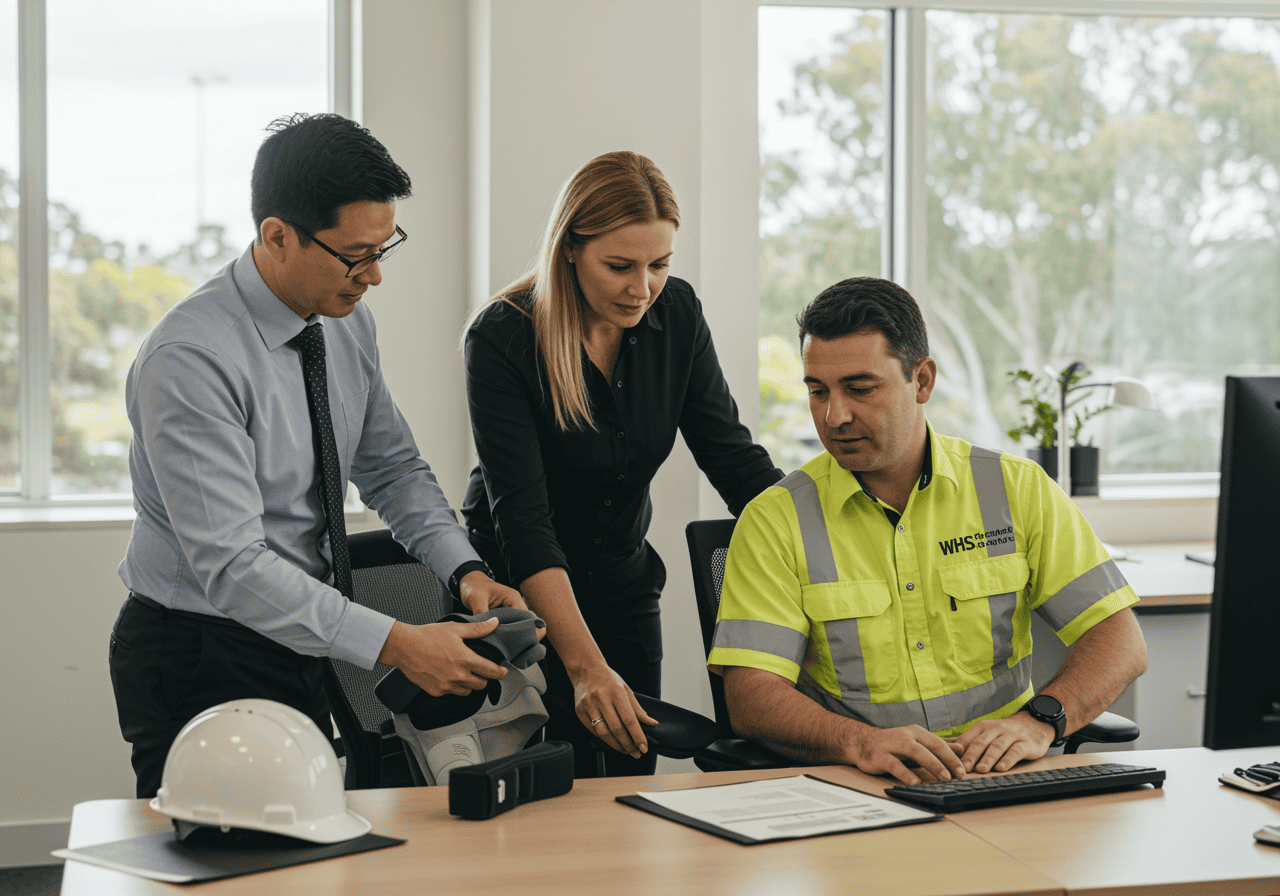
Integrating occupational therapy with HR, WHS and return-to-work programs starts with clear policy alignment and shared governance. Occupational therapists should be embedded in policy development forums so clinical recommendations translate into feasible workplace adjustments and WHS controls. Establishing referral pathways, consent processes and escalation criteria ensures therapists, HR and safety teams act from the same playbook when assessing duties, approving adjustments and managing risk. This cross-functional alignment reduces delays in decision making, clarifies responsibilities for reasonable adjustments and supports consistent application of rehabilitation plans across sites. Embedding AiDial voice-enabled workflows into governance allows faster capture of clinical recommendations and staff acknowledgements, automates task assignments to line managers and creates auditable records retained on Australian servers. That combination maintains compliance, strengthens duty-of-care documentation for workers compensation matters and reassures employees and regulators that sensitive health data remains under Australian data sovereignty and subject to local privacy protections.
Effective return-to-work outcomes depend on reliable, timely communication between clinicians, line managers and employees. Occupational therapists can design standardised templates for functional capacity assessments, phased duties and ergonomic plans that plug directly into HR case management systems. Routine check-ins, RTW milestone reviews and early intervention triage can be automated using AiDial AI voice solutions to schedule calls, collect symptom and function updates, and prompt managers with next steps. These voice interactions reduce administrative burden, improve adherence to rehabilitation plans and capture consistent data in the employee record. Crucially, when AiDial processes and stores these interactions exclusively in Australia, organisations retain control over sensitive health information and meet employer obligations under privacy and workplace safety law, while improving response times and keeping employees engaged through personalised, timely communication.
Integrating occupational therapy into HR and WHS should produce measurable improvements in absence rates, time to safe duties and workers compensation costs. Define KPIs such as days to first contact, proportion of successful graduated returns and clinical outcome scores, and ensure occupational therapists contribute to regular performance reviews. Use aggregated, de-identified data from RTW cases to identify high-risk roles, training gaps and opportunities for ergonomic redesign. AiDial supports this by delivering consistent data capture through voice-enabled assessments and automated reporting dashboards, while guaranteeing that raw and derived data never leaves Australian jurisdiction. That Australian data sovereignty simplifies compliance with federal and state privacy obligations and provides auditable trails for regulator enquiries. Continuous improvement cycles that combine clinical insight, operational metrics and locally hosted AI data create a robust evidence base for investing in prevention and targeted rehabilitation programs that deliver quantifiable savings.
Leveraging AI Voice Solutions and Australian Data Sovereignty to Support Therapy Outcomes
AI voice solutions can extend occupational therapy beyond clinic walls by automating routine interactions, collecting objective functional data and supporting day to day rehabilitation tasks. AiDial voice agents can guide employees through standardised spoken assessments, prompt prescribed exercises, log pain or fatigue reports and deliver tailored coaching without requiring clinician time for every contact. This reduces administrative overhead for allied health teams and improves adherence to therapy plans, which translates to faster functional recovery, fewer lost work days and lower workers compensation exposure. Crucially, all voice interactions and clinical data are captured in formats that support trend analysis, enabling therapy teams to measure progress and refine interventions with evidence rather than anecdotes.
Integration with HR, WHS and return to work systems is where AI voice technology delivers practical business value. AiDial platforms can automate appointment scheduling, trigger case manager alerts for flagged risks, generate medico-legal ready logs and feed anonymised cohort metrics into workplace wellbeing dashboards. These automations free up clinicians to focus on higher value interventions and give managers timely, actionable insights that support safe task redesign and graded duties. Because AiDial operates with Australian Data Sovereignty, employers and insurers can integrate voice‑captured clinical information into their case management workflows without creating cross border data risks that complicate compliance with state based workers compensation rules and privacy obligations.
Security, trust and cultural fit matter when dealing with health information and occupational rehabilitation. Employees are more likely to engage with digital therapy tools if they know sensitive voice and health data are processed and stored exclusively on Australian soil, under local legal frameworks and supported by local teams. AiDial combines this data sovereignty promise with voice models specialised for Australian accents and workplace language, making interactions more natural and accessible for a diverse workforce. By pairing clinically informed occupational therapy workflows with secure, locally hosted AI voice technology, organisations can improve participation, speed return to productive duties and demonstrate measurable improvements in wellbeing and productivity.
Best Practice Implementation: Training, Technology and Ongoing Evaluation
Effective implementation begins with targeted training for managers, HR, WHS officers, occupational therapists and workers. Training should cover how to use assistive devices, interpret functional assessments and integrate AI-generated insights into task redesign and return-to-work planning. Practical workshops and scenario-based learning help leaders recognise early signs of musculoskeletal strain or cognitive overload and act on automated prompts from voice tools. Upskilling occupational therapists to interpret voice-derived metrics ensures clinical rigour while empowering line managers to implement reasonable adjustments. Emphasise change management, privacy and consent in training so staff understand how their data is handled under Australian Data Sovereignty. Local, culturally aware support and refresher sessions reinforce adoption, reduce resistance and speed time to measurable outcomes such as reduced absenteeism and faster safe returns to productive duties.
Choose technology that integrates seamlessly with existing HR, WHS and return-to-work systems while prioritising security and compliance. AiDial’s AI voice solutions offer automated screening calls, symptom checks, appointment reminders and structured functional interviews that capture consistent data for clinicians and case managers. Crucially, processing and storage occur under Australian Data Sovereignty, reducing regulatory risk and building employee trust by ensuring information remains onshore. Integration reduces administrative burden through automated workflows and real-time alerts, enabling faster interventions and better use of clinician time. Ensure interoperability with case management software and payroll systems, and plan for phased deployment with pilot testing to validate clinical workflows and data flows before wider rollout.
A robust evaluation framework turns interventions into measurable business outcomes. Establish baseline measures for function, absence rates, workers compensation costs and engagement, then use AI voice interactions and clinician assessments to track progress against KPIs. Regular dashboards and reports help pinpoint where interventions succeed or need adjustment, and aggregated, de-identified datasets stored under Australian Data Sovereignty enable safe benchmarking across sites. Implement feedback loops with clinicians and staff to refine scripts, change training priorities and optimise task redesigns. Periodic audits, cost-benefit analyses and governance reviews ensure the program remains aligned with WHS obligations and commercial goals. Ongoing vendor partnership with local support from AiDial ensures rapid updates, compliance assurance and continuous improvement towards better wellbeing and productivity metrics.



Conclusion and Key Takeaways
Occupational therapy is a practical, evidence-based approach to improving workplace wellbeing and productivity by addressing common challenges such as musculoskeletal strain, mental health, cognitive overload and return-to-work barriers. Targeted interventions like ergonomic adaptations, graded activity, job redesign, education and early intervention can reduce absenteeism, lower claims costs and boost performance, while clear measurement of outcomes makes the business case for ongoing investment. Embedding occupational therapy into HR, WHS and return-to-work programs creates continuity of care and stronger compliance and safety outcomes for employers and employees alike.
To scale impact and measure ROI, integrate technology responsibly: AI voice solutions can automate follow-ups, capture patient-reported outcomes, support remote monitoring and streamline referrals, producing reliable data for continual improvement. Choosing a provider that guarantees Australian data sovereignty, such as AiDial, ensures sensitive health and workplace data is processed and stored on Australian soil, improving security, compliance and trust with staff and regulators. Combine this technology with proper training, clear workflows and regular evaluation to optimise therapy outcomes and cost savings. Contact Us for a Consultation to explore how occupational therapy and AiDial’s secure AI voice solutions can improve wellbeing and productivity in your workplace.